
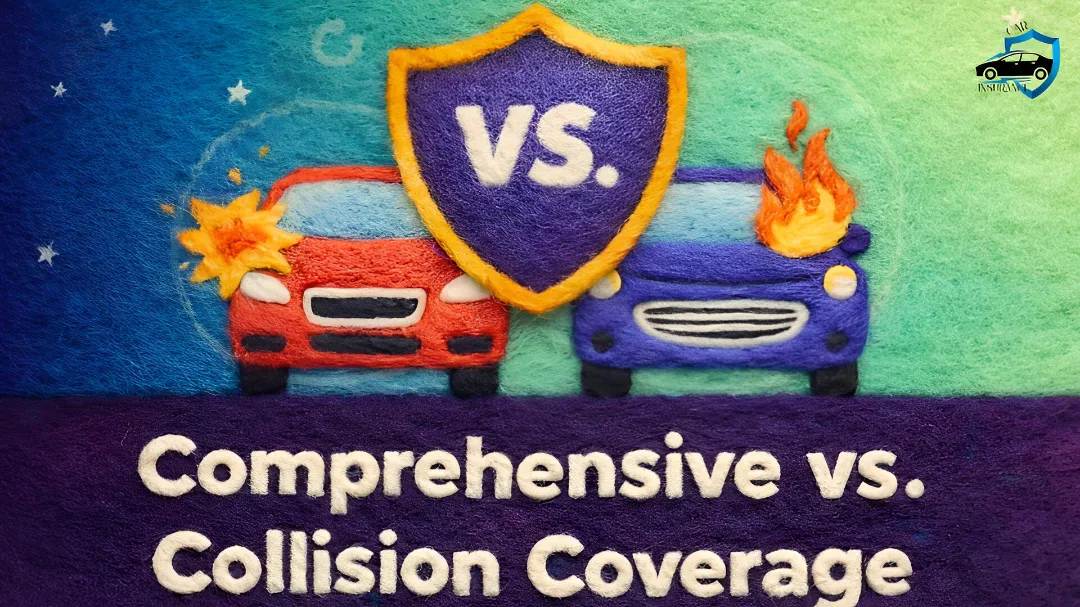
Learn what collision and comprehensive covers, what the insurance policy will cover won’t, when to use it and how they work in concert — plus advice on how to select wise auto insurance coverage. This straightforward, reliable and practical insurance manual is a complete guide to everything you need!
Introduction
If you’re a driver, there’s a good chance you have read about words that are commonly used in the world of auto insurance as you were looking at your coverage options. Many drivers are familiar with the terms but don’t quite know what each type of protection provides. When it comes to checking off boxes on an insurance package, they frequently have as much understanding of the product and what’s covered — or when it’s really necessary – as I do when filling out a tax form: not very much. The result? They may buy protection that doesn’t actually benefit them, or worse, they come out of the woodwork with claims for thousands (or tens of thousands) in repair payments after an accident or unexpected event. Knowing the different types of coverage can help if you want to ensure your car, bank account and peace of mind are secure.
These have very different purposes. One helps protect your car post-crashes, whether it’s a collision with another vehicle or an object (a fender-bender or hitting something else like a fence or pole). The other protects your car from damage that has nothing to do with an accident, such as theft, vandalism, fire, flooding or hail; in the event a rock chips your windshield on some desolate road. Both types of coverage are very important, and knowing how they work together will help to keep you and your bank account safe from all sorts of risks.
A lot of car owners think that any car insurance is “full coverage,” but this isn’t true. There is a different concept behind liability insurance, which provides separate coverage from these others. Where liability covers damage you do to others, other types of coverage pay for repairs to your car. Without it, even small incidents — including slipping on ice and hitting a pothole or being the victim of vandalism — can result in costly out-of-pocket repair bills. Combined, these two coverages act as a cushion to ensure you’re not hit with the entire burden.)
These types of protection will be examined in detail by this guide. You’ll learn:
- What your policy covers or doesn’t — from accidents with other vehicles and collisions with fixed objects to rollovers, theft, vandalism, fire damage, flood damage, hail damage and more.
- The crucial distinctions between the kinds of coverage — so you can understand exactly when each one applies, and why both may matter depending on your car and situation.
- Deductibles and costs: What to consider when choosing a plan with the right price.
- When to buy or drop specific coverage — based on your car’s worth, age, driving tendencies and financial state of readiness.
- The way the coverage works in concert — covering you, because when it all comes together, it creates an almost seamless financial safety net that shields you from a variety of possible losses.
By the time you wrap up, you’ll know not only how various types of auto coverage work but also how to use them to defend your car and pocketbook wisely. This is not a take-it-or-leave-it insurance but a means of financial protection that enables you to be prepared for both predictable and unforeseeable occurrences. By matching accident protection with non-accident coverage, you have the peace of mind to drive knowing you’re protected against crashes, theft/natural disasters and other events.
In other words, knowing about these options will help you make better insurance decisions. It can help you steer clear of pricey errors, protect your car’s value and support the financial protection that is required to manage unforeseen incidents on the road. Whether your car is new, financed or leased — or well-seasoned vintage iron on its last legs — knowing these options is important both to protect and control the costs of auto ownership.
What Is Collision and Comprehensive Coverage
Both collision and comprehensive coverage are designed to protect your vehicle, but in very different cases.
Collision Coverage
Collision coverage: This covers damage to your vehicle caused by a collision with another car or object, and repairs are issued without taking into account the amount of depreciation.
It applies to:
- A crash with another vehicle
- Hitting an inanimate object (pole, guard rail, fence)
- Rolling over
- Potholes and Road Hazardsникальное значение Damage due to potholes and other road hazard.types.unique Damage from potholes and other road hazards
Coverage is for collision, regardless of who is at fault. You first pay your deductible and the insurer covers the rest of the charges up to what is called the actual cash value of your car.
Comprehensive Coverage
When damage that isn’t caused by a collision happens, you’re covered with comprehensive coverage. Typical scenarios include:
- Theft or attempted theft
- Weather damage (hail, floods, windstorms)
- Fire or explosions
- Vandalism or riots
- Things falling or jumping down (tree branches and debris)
- Earthquakes
- Animal collisions
- Broken windshields
Comprehensive insurance has its own deductible and covers your car for non-driving-related events that are outside of your control.
Key Distinctions between Collision and Comprehensive coverage

The two coverages are frequently confused, but they serve completely different goals.
| Events that led to damage | Collision Coverage | Comprehensive Coverage |
|---|---|---|
| Other car | Yes | No |
| Pole or barrier | Yes | No |
| Theft | No | Yes |
| Weather-related damage | No | Yes |
| Vandalism | No | Yes |
| Hitting an animal | No | Yes |
It could be that you need both to fully insure your car.
Deductibles and Costs
Each collision and comprehensive policy comes with a deductible — the amount you are responsible for paying of pocket before insurance takes over.
- Low deductible: you’ll pay higher premiums but a smaller amount if you find it necessary to make a claim
- High deductible: Pay less in premiums, more toward costs out of pocket
Select the deductible that best suits your car’s value, finances and risk tolerance.
Why You Might Need Collision and Comprehensive
Loan and Lease Requirements
If you’re financing or leasing your car, finance companies usually demand you have collision and comprehensive coverage to protect their interests until the loan or lease is paid off.
Protecting Against High Repair Costs
Thousands can be lost even from small accidents or bad weather. With collision and comprehensive coverage, you are responsible only for the deductible — everything else is covered by your insurer.
Example:
- Rear-end collision repair: $4,500
- Deductible: $500
- Insurance payout: $4,000
If you didn’t have that coverage, you’d pay the entire $4,500.
The Combined Role of Collision and Comprehensive Insurance
- Collision: covers crash-related damage
- Comprehensive: covers non-crash damage
Together they constitute full physical damage coverage for your car, in addition to liability insurance, which covers others.
Choosing Deductibles
- Lower deductibles: Pay less when you make a claim, but with higher monthly premiums.
- Higher deductible: Less costly premiums however in an accident you pay more out of pocket
Here, based on your car’s value and finances, you’ll balance cost against risk.
Collision and Comprehensive Costs

Premiums depend on:
- Car value
- Driving history
- Location
- Deductible choices
- Insurance provider
QuoteWizard Insurance finds that collision insurance is usually more expensive than comprehensive insurance because accidents occur more frequently than non-collision damage.
When Can You forgo Collision or Comprehensive
For older cars that have relatively little market value, paying for collision coverage may not be worth the cost. You might consider dropping one or both coverages in this situation if the combined cost for premiums and deductible is more than the car’s value, assuming you can afford repairs or a new car on your own.
Real-World Examples
Rear-End Collision
- Damage: $5,000
- Deductible: $500
- With collision: you foot the bill of $500, insurance picks up the remaining $4,500
- Without coverage: pay $5,000 out-of-pocket
Hailstorm Damage
- Damage: $3,000
- Deductible: $1,000
- If you have full coverage: You pay $1,000, insurance pays $2,000
How to Tell If You Need Collision and Comprehensive Coverage
Assess Your Car’s Value
- Newer or higher-value cars : probably need both coverages
- Older cars (or cheaper ones): Self-insuring could cost less
Consider Your Driving Habits
- High-traffic areas: Lots of collision coverage worthwhile
- Long-distance commuters: both coverages recommended
- Less risky drivers: cost of being uninsured may make sense
Geographic and Environmental Factors
- Storm or flood-hit areas: full essential
- High-crime locations: all-encompassing covers robbery and vandalism
- Pothole/ice dam sections of the road: collision is for accident damage
Evaluate Financial Comfort
- Will you have $3,000 to $5,000 for repairs at your fingertips? If not, keep both coverages
- Low risk tolerance: Get low deductibles and keep both coverages.
- High risk tolerance: high deductibles, low premiums, substantial out-of-pocket exposure
Loan and Lease Considerations
Both coverages are typically required by lenders for as long as you have an auto loan.
Strategically Combining Collision and Comprehensive
- Crash: car wrecks and damage caused by driver
- Full: Both — including non-accident damage such as fire and theft from your home or vandalism
Example:
- Tree falls on vehicle → comprehensive pays
- Steering and striking guard rail → collision pays
Comparing Deductible Options
- New/high-value vehicles: Mid-deductible to balance both perspectives and risk exposure
- Older/low value cars: raising the deductible reduces your premium
Cost vs. Value Analysis
- New car ($25,000): premiums $800–$1,200; potential damages $5,000–$10,000 – worth it.
- Older car ($2K): premiums + deductible =~$1K; repair = $500 → think about self insuring
Real-World Scenarios
City Driver with New Car
- Vehicle: 2024 sedan, $28,000
- Coverage: collision + comp, 500 deductible
- Theft: comprehensive covers
- Fender bender: collision covers
Country Driver with Old Car
- Vehicle: 2010 SUV, $3,500
- Coverage: comprehensive only, $1,000 deductible
- Deer accident: non-coverable accident, pays out of pocket
- Storm damage: comprehensive covers
Seasonal and Geographic Risks
- Winter: icy roads(slick) → collision coverage.
- Spring/flood season: floods → comprehensive treatment
- Hailstorm regions: comprehensive covers damage
- High-theft areas: comprehensive protects
Common Mistakes About Collision and Comprehensive

- Collision includes everything → covers only the collisions
- Comprehensive for new cars only → covers all similar to above, but with only the average car age being different.
- I feel secure on road car → accidents occur by surprise.
- Insurance is too costly → price based on car’s worth, location, and deductible
How to Maximize Your Coverage
- Compare providers and quotes
- Choose deductibles wisely
- Keep your car in shape to avoid hazards
- Bundle policies for discounts
- Reassess coverage periodically
Final Thoughts
Collision and Comprehensive coverage isn’t just for the wealthiest among us, it’s part of a basic protection that every driver can benefit from, to varying degrees. Understanding how Collision and Comprehensive operates puts YOU in control of your car’s safety, your money, and your peace of mind. Without it, even small accidents or unforeseen events can have a huge financial impact.
Collision and Comprehensive coverage function as a barrier in two parts:
- ‘Collision coverage’ provides insurance for your car from damage due to direct accidents. This entails crashing into other vehicles, striking static objects such as poles, guardrails or fences, and rolling over cars in addition to single-vehicle accidents like skidding on ice. Collision insurance makes sure you pay only what’s reasonable and necessary to repair your car, as opposed to the entire cost of a new car or other time-intensive repair.
- Comprehensive insurance covers your auto against non-accident damage, such as theft, vandalism, fire, floods and storms (including the web-footed variety), hail, falling objects and splitting cambelts. Comprehensive coverage is also involved with its own deductible, which can help cover big, unexpected expenses for things that would otherwise cost you out of pocket.
And if your car is older or lower in value, limiting collision and comprehensive coverage — or opting for the highest deductible you can afford — can help you save money without putting yourself at major risk. Lenders require Strike and Comprehensive coverage for new, financed or leased vehicles — but even if they don’t, maintaining both will prevent you from being on the hook for thousands of dollars after an accident or storm.
By keeping Collision and Comprehensive coverage, you can:
- Safeguard from expensive repairs after accidents be they minor or major
- Protect the value of your vehicle and preserve its life expectancy
- Don’t pay for full amount of repairs due to the unexpected happening
- Mix and match coverage based on the value of your car, your driving habits, and risk exposure
- Rest easy knowing that you have protection against financial losses due to accidents or unexpected damages
Don’t underestimate Collision and Comprehensive coverage. Accidents, weather-related damage, theft and vandalism don’t discriminate — even responsible drivers can be affected. With Collision and Comprehensive coverage, you’re covered whether the damage to your vehicle is from another car, a road hazard or an unexpected storm.
FAQs Related to Collision and Comprehensive
1 . What is the difference between collision and comprehensive insurance?
Collision coverage covers repairs to your car after accidents such as hitting other vehicles or objects. With comprehensive coverage, for non-accident related incidents that cover theft, fire, vandalism, natural disasters and animal crashes.
2 . Is it necessary to have collision and comprehensive coverage?
If your car is newer, financed, leased or worth a good amount of money, you may want to have both. Depending on your ability to pay for repairs out of pocket, you may not need both if you own old cars with little market value.
3 . How do collision and comprehensive coverage deductibles work?
Each coverage comes with its own deductible — what you pay before insurance kicks in. The lower the deductible, the more the premiums — and vice versa — but also the less that will come out of pocket after a claim. A higher deductible means a lower premium, but more risk for you out of pocket.
4 . Does collision and comprehensive coverage cover me if I hit a pothole or a tree falls on my car?
Collision coverage covers damage from hitting potholes or objects such as guardrails. Comprehensive coverage pays when non-accident events such as a tree falling, hail damage and vandalism occur.
5 . Can I just take off collision or comprehensive to save?
Yes, but this depends on the value of your car, where you live, your driving history and finances. “A lot of people keep physical damage coverage because they’re worried about their car being stolen, but if the book value is less than your deductible plus four years of premium, then really it’s time to self-insure and just have liability,” Insure.com’s Barry said.