
Understand one of the most common types of insurance car insurance basics that covers car loss: this easy-to-follow, simple guideline. Know the types of cover, deductibles, premiums and clever tips to make expensive errors.
Introduction
Learning the car insurance basics is one of the adult tasks most people do not like to think about until something goes wrong. Accident, broken windshield or even stolen car would become a nightmare in terms of finances unless you are well covered. The positive thing is that auto insurance can be not difficult or confusing.
This manual simplifies it all in very simple terms. You will also get to understand the way in which car insurance operates, the various types of cover and the impact of deductibles and premiums on your finances and how to select the best policy to fit your need. By the time it is over, you will be comfortable to make intelligent choices rather than to make guesses.
What Is Car Insurance Basics and Why It Matters
Car insurance is fundamentally a legal and financial contract with one of the insurance companies and you. You pay a premium and in the process the insurer agrees to cover some losses which have been defined in your policy.
The actual worth of car insurance fundamentals is protection. Even one accident is capable of translating to thousands of dollars in hospital bills, repairs, lawsuits and lost wages. Insurance is there to make sure that those expenses do not clean you out.
The Financial Safety Net
Car insurance basics cover:
- Healthcare costs of injuries.
- Replacement/repair of automobiles.
- Property damage you cause
- The liability in the event of a lawsuit.
These are expenses which are paid out of pocket when you are uncovered.
How Car Insurance Basics Works
Learning the mechanics of a policy is a major aspect of learning the ropes of car insurance basics.
Premiums Explained
A premium is what you pay, generally on a monthly or semi annual basis in order to have your policy in force. Your premium depends on such factors as:
- Age and driving experience
- Contributing to traffic and automobile offenses.
- Location and zip code
- Vehicle type and value
- In most states credit history.
What a Deductible Means
Deductible refers to the sum you pay prior to the commencement of insurance. As an example, when the cost of repairs is 2000 dollars and your deductible is 500 dollars you pay 500 dollars and the remaining part is paid by your insurer.
Increasing the deductibles tends to reduce the premiums, but they have the effect of rising out-of-pocket expenses in the case of a claim.
Mandatory vs Optional Coverage
Quite a considerable portion of car insurance basics consists in the knowledge of which coverages are mandatory and which ones are optional.
State Minimum Requirements
All the states have mandated drivers to have liability insurance. This makes sure that you can afford to purchase damage or injuries that you inflict on other people.
The minimum coverage depends on the state, and it is not usually sufficient in the case of severe accidents.
Optional Coverage Choices
Considering optional coverages are optional coverages over and above the minimum cover and usually are economical in the long term.
Types of Car Insurance Coverage
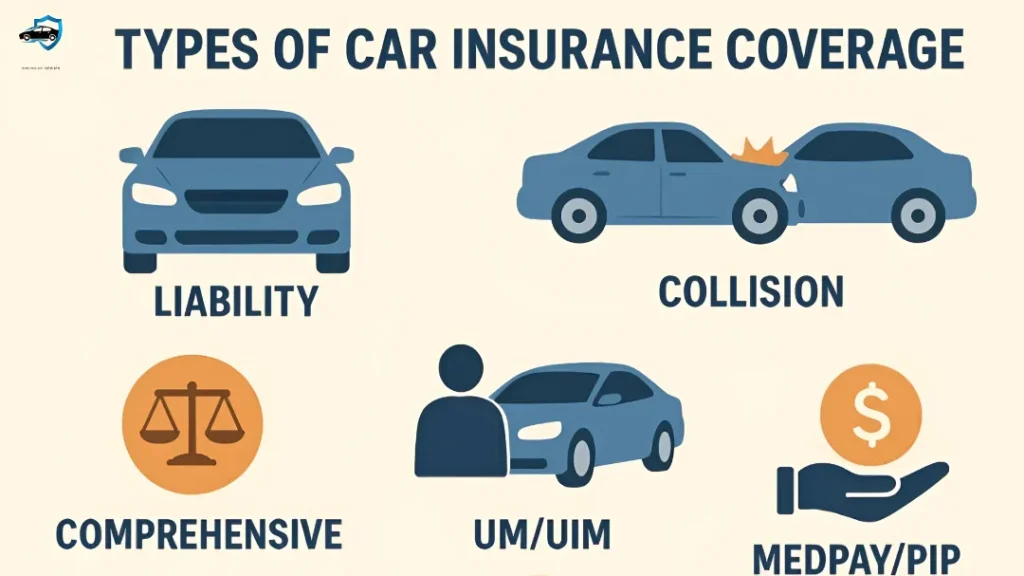
Understanding coverage types is essential to learning car insurance basics properly.
Bodily Injury Liability Coverage
This is a coverage that covers the injuries that you cause to other people in an accident. It includes:
- Medical bills
- Rehabilitation costs
- Legal defense fees
- Court settlements or court decisions.
Higher limits protect your personal assets.
Property Damage Liability Coverage
Liability in property damage includes the repairs to the property of other person and include:
- Vehicles
- Fences
- Buildings
- Utility poles
Commercial property and luxury cars can prove to be very costly in claims.
Personal Injury Protection (PIP) and Medical Payments
Medical expenses on you and your passengers are covered by PIP and MedPay, whether you are at fault.
PIP may also cover:
- Lost wages
- Childcare expenses
- Funeral costs
PIP is compulsory in non-fault states.
Collision Coverage
The collision insurance will cover the damage to your own vehicle when:
- A crash with another car
- A rollover accident
- Banging an object such as a guardrail or pothole.
Collision coverage is normally subject to deductible.
Comprehensive Coverage
Comprehensive insurances cover non-collision causes such as:
- Theft
- Vandalism
- Fire
- Floods
- Falling objects
- Animal collisions
Auto lenders usually insist on it.
Uninsured and Underinsured Motorist Coverage
This coverage will cover you unintentionally by an offender who:
- Has no insurance
- Has insufficient insurance
The common cover under this protection is medical bills and vehicle damage.
What Does “Full Coverage” Really Mean?
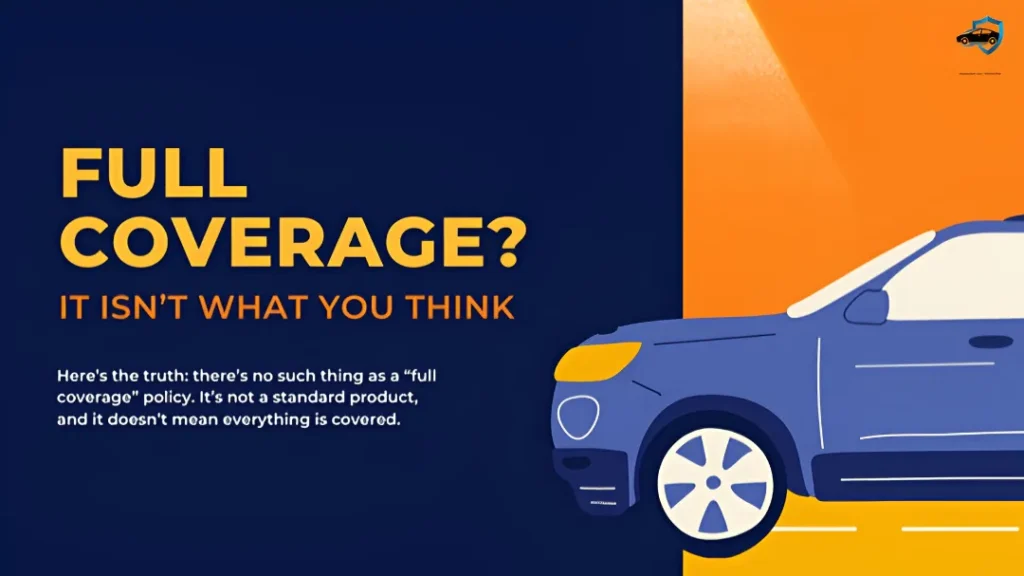
This is a term that is not understood by many drivers. Based on the perspective of car insurance basics, a full coverage generally consists of:
- Liability insurance
- Collision coverage
- Comprehensive coverage
It does not imply that all the possible situations are discussed. Always ensure that you read your policy particulars.
Add-On Coverages Worth Considering
There are optional coverages that are very powerful in relation to your way of life.
Rental Reimbursement
Pays for a rental car while your vehicle is being repaired after a covered claim.
Towing and Roadside Assistance
Covers services such as:
- Towing
- Jump starts
- Flat tire changes
- Lockout assistance
Gap Insurance
Gap insurance is the amount of difference between your vehicle and the loan balance in case of a total on your vehicle.
The No-Fault Insurance Explanation.
Drivers are obliged to have PIPs in non-fault states. Once an accident has taken place, it is your own insurance that covers the injury despite the cause of the crash.
This system reduces the number of lawsuits, but it emphasizes more the need to know the basics of car insurance before selecting a cover.
How Claims Work Step by Step
Another critical car insurance basics essential is knowing the process of claims.
1 . Insure your accident to your insurer.
2 . Present pictures, police records and statements.
3 . A damage appraiser measures up the destruction.
4 . Reimbursements are accepted or repaired.
5 . Deductible is charged where necessary.
6 . Reporting allows avoiding delays in claims.
7 . What Influences your car insurance premiums.
The amount to pay depends on a number of factors.
Timely reporting helps avoid claim delays.
What Affects Your Car Insurance Rates
Several factors influence how much you pay.
Driving History
Accidents, speeding ticket, and conviction due to DUI increase premiums.v
Vehicle Type
Luxury and sports cars are more expensive to insure compared to sedans or SUV.
Location
Metropolitan regions that have more thefts and accidents raise premiums.
The Question of How Much You Need to Be Covered.
The car insurance basics are taken into consideration at the point of choice of coverage limits.
The time to increase the limits of liability.
Greater limits should be seriously considered in case:
- You own a home
- You possess investments or savings.
- You drive frequently
Minimum coverage is hardly sufficient to cover assets.
High-Risk Drivers and Special Insurance.
High-risk policies might be required to motorists who have committed various violations.
SR-22 and FR-44 Insurance
The following certificates will show that you are fulfilling the state insurance requirements after:
- Driving uninsured
- Reckless driving
- DUI convictions
These policies are not provided by every insurance company.
Common Car Insurance Myths

Knowing the fundamental aspects of car insurance also implies that one does not get misinformed.
- There is no high cost on red cars and their insurance.
- Full coverage is not an unlimited coverage.
- Your business use might not be covered by your insurance.
- Even without fault, claims have the power to increase rates.
Car Insurance Money Saving Tips.
Protection does not have to be compromised in order to save money.
Smart Ways to Lower Premiums
- Buy auto and home insurance together.
- Increase deductibles in a responsible manner.
- Have a good driving history.
- Enquire on safety features discounts.
- Shop around annually
The Right Way to Compare Insurance Quotes.
In comparing policies always look at:
- Coverage limits
- Deductible amounts
- Exclusions
- Reputation of customer service.
- Customer satisfaction rates.
Value cannot be related to price.
The reason why the car insurance basics are important in the long run.
Acquiring knowledge on car insurance is not a one-time activity. A policy should be reviewed when life changes like getting married, changing the place of living, or acquiring a new car.
Being proactive helps you:
- Avoid coverage gaps
- Reduce financial risk
- Be in compliance with the state laws.
- Protect long-term assets
Final Thoughts
Car insurance is not a mere legal obligation. It is a financial security measure that provides you security in case life has been misplaced. Being on top of the basics of car insurance will give you control over your coverage, how much you pay in terms of cost and the peace of mind.
Knowledge will help you make the right decisions instead of making guesses or purchasing the lowest bid. Thousands of dollars and many headaches can be saved by a properly selected policy in the right time.
FAQs CONCERNING CAR INSURANCE BASICS
1 . What is car insurance?
Car insurance is a contract between you and an insurance company that helps cover costs if your car is damaged, stolen, or involved in an accident. You pay a monthly or yearly premium for this protection.
2 . Obligations to car insurance basics car insurance is mandated in most jurisdictions?
At the very least, motorists are normally required to possess liability insurance to compensate on the damage or injury they cause to others.ar insurance mandatory.
3 . What are the terms of the liability coverage?
The liability coverage reimburses the medical expenses and property damage caused by other people in the case of an accident in which you were at fault. It does not deal with the repair of your own vehicle. liability coverage include.
4 . What is a deductible?
A deductible is defined as the amount of money that you pay out of pocket before insurance begins to cover a claim. As an example, when you have a deductible amount of 500, you pay it first, and insurance pays the remainder.at is a deductible.
5 . What influences the amount of money charged as insurance premiums?
Insurance companies consider aspects such as your age, driving record, address, car type and the frequency with which you drive to determine the amount of money they will charge you are car insurance premiums calculated.