
Liability insurance saves you embarrassment of expensive law suits and loss of money. Get to know how it works, types, benefits and reasons why it is necessary in contemporary times.
Introduction
Liability insurance is one of those that people are aware that they should possess but they do not even realize fully. It is also very technical, legal or just applicable once something goes wrong. It is, in fact, a low-tech concept with an enormous outcome on your financial security.
It is a form of insurance that you have whether you own a car, run a business, live in an apartment, or even work as a professional, it is quietly working in the background to protect you. When things go wrong, which they do, it may translate into a simple inconvenience that is easy to overcome or a life altering financial disaster.
This guideline indicates its definition, functionality, the various types of cover, and the selection of the appropriate coverage. No jargon. No sales talk. Only straight-forward and handy facts you can depend upon.
What Is Liability Insurance?
Liability insurance in its simplest form is what will keep you safe when legally someone has suffered harm or damages under your fault. That may be bodily injury, damage of property or even a loss of money as a result of your deeds or omission.
You do not need to use your own premiums or settlements to pay compensation, legal fees, or settlements to a defendant in a legal case, or possibly settlements, but the insurer will come to your rescue and cover them the up to the limit of the policy.
Why It Exists
Modern life involves risk. Cars move fast. Companies deal with business people. Advice is provided by professionals, which others are used to. Accidents may happen even during the daily routine. Injuries do provide victims with the right to compensation, which is costly to litigate.
Liability insurance is provided to seek that risk and to be financially stable in the event that something occurs.
The Workings of Liability Insurance.
Knowledge of coverage can make you not get caught off-guard in the future.
The Basic Mechanism
When covered incident happens, the process typically appears to be as follows:
- Something goes wrong or an accident takes place.
- A third party asserts injury or damage or loss.
- You notify your insurer
- The insurance company makes an investigation of the claim.
- Legal defense expenses are done.
- There is compensation paid in case of being liable.
The point is that the insurer does not provide damages only. They also handle the defense of the law that is equally expensive as compensation.
Cap on Policy Limits and Deductibles.
All the policies have a limit within which the insurer will pay. Then, at that limit any additional cost is your responsibility. There are also some policies that have deductibles, that is, the amount you have to pay prior to being covered.
It is important to select limits that are equivalent to your risk exposure.
The Case of Liability Insurance and Why It is More Important Than Ever.
Legal claims are more prevalent, more sophisticated, and more costly, as compared to the past. Medical costs have risen. More compensation is given by courts. Even casual accidents can become the huge financial problem.
Liability insurance is a financial cover. It secures your future, savings, income and assets.
Otherwise, one law suit may wipe out years of painstaking efforts.
Types of Liability Insurance.
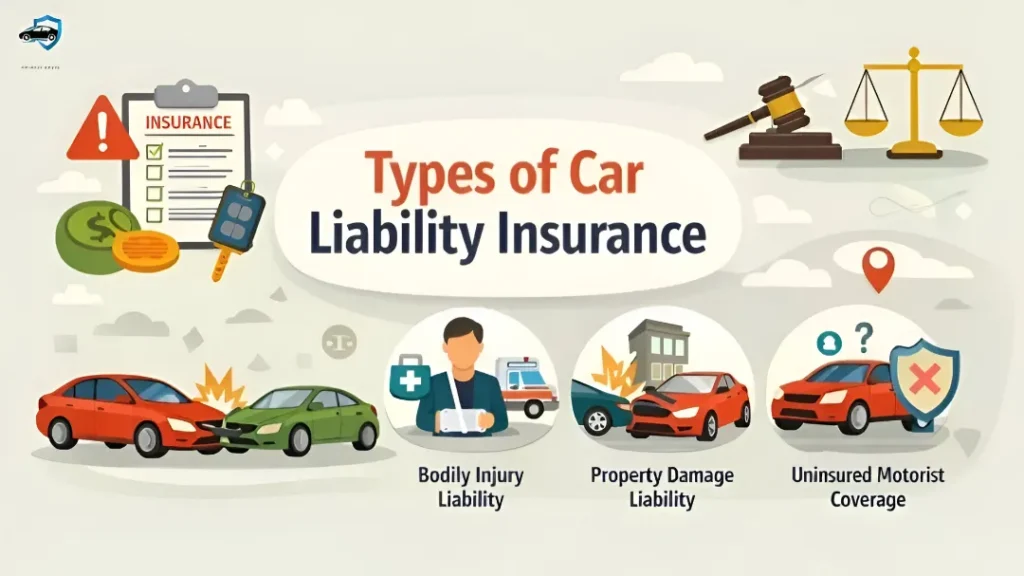
There are various scenarios that need various coverages. The most frequent are listed below.
Motor Liability Coverage
This type is applicable to the vehicle owners and drivers. It includes the harm/ damage inflicted on other people by the use of a motor vehicle. It is legally compulsory in a lot of countries.
It typically covers:
- Corporeal harm to third parties.
- Property damage
- Legal defense costs
Personal Liability Coverage.
This is often included in homeowners or renters policies, in which it protects individuals against claims caused by daily life.
Examples include:
- A guest slipping in your home
- Your child spoiling property of some other person.
- Personal accidental injury.
Professional Liability Insurance.
This is created to target individuals that offer services or guidance, which include doctors, lawyers, consultants, and engineers.
It covers:
- Professional negligence
- Errors or omissions
- Breach of professional duty
Public Liability Insurance
This coverage is dependent on businesses that interact with customers or the people.
It protects against:
- Injuries of customers on business premises.
- Damage to client property
- Litigations under business operations.
Product Liability Insurance.
This protection is employed by manufacturers, distributors and sellers when products result in harm or injury.
It applies when:
- A product is defective
- There are poorly designed instructions.
- Safety warnings are missing
Types of Liability Insurance that are generally covered.
Its coverage is based on the policy but the majority of them have the following essential parts.
Legal Defense Costs
The lawyers, court fees, expert witnesses, and administrative costs are reimbursed, even in the situation when the claim proves to be not justified.
Pay and Compensations.
In the event that you are proven to be legally liable, the policy compensates the injured party in accordance with the insured limit.
Medical Expenses
Injured third parties are normally provided with medical treatment expenses, particularly motor and personal policies.
What Is Usually Excluded
There is no insurance that is comprehensive. Common exclusions include:
- Intentional acts
- Criminal behavior
- Extra statutory contractual obligations.
- Some environmental losses.
- Claims prior to the period of the policy.
It is important to read inclusions and exclusions very carefully as it is to comprehend coverage.
Liability Insurance and the Law.
Liability insurance is not optional in numerous instances.
Mandatory Coverage
In most countries, the owners of motor vehicles are required to have a liability coverage. It is frequently compulsory to insure workplace hazards by employers. There are certain professions, which are not legally allowed to work without professional cover.
Noncompliance may cost fines or suspension of a license or even criminal punishment.
Cross-Border Considerations
In places such as the European Union, there is harmonization of rules that enable coverage to take place even across the borders. This will guarantee the accident victims be compensated even when the accidents happen outside their home country.
How to Select the Best Liability Insurance.
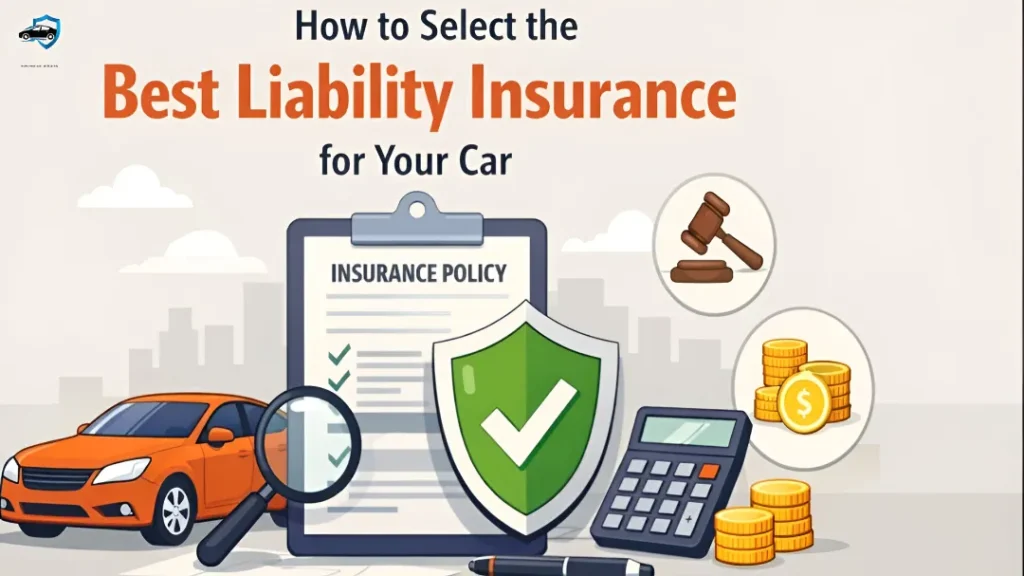
The selection of the appropriate policy entails knowing your risk.
Assess Your Exposure
Ask yourself:
- Do I interact with the public?
- Am I a giver of advice or services?
- Am I in possession of valuable property?
- Will it be a big claim as a result of one mistake?
The greater the risk is the greater your coverage limits ought to be.
Look at Coverage, Not Price.
Lowest price does not necessarily imply quality. Look at:
- Coverage limits
- Exclusions
- Legal defense included
- Claims handling reputation
Review Regularly
Life changes. So should your coverage. Review your policy when you:
- Buy property
- Start a business
- Change professions
- Increase assets
Real-Life Examples
Case 1: An Easy Car-Crash.
Some minor collision is caused by a driver. The other party experiences whiplash and damage of the vehicle. The bills and repair cost more than several thousand euros. Liability insurance is used to cover compensation as well as legal expenses.
Example 2 A Business Slip-and-Fall.
A customer is on a wet floor in the store and falls over. The damage results in an operation and loss of income. Public coverage shields the company against a crippling financial blow.
Example 3: Advice with a Professional Gone Bad.
A consultant provides advice which causes the client losses. The client sues. Legal defense and settlement is covered by professionals.
The Economic Cost of going Uninsured.
In the absence of liability insurance, you incur the personal expenses of:
- Court proceedings
- Lawyer fees
- Compensation awards
- Asset seizure
- Wage garnishment
This may lead to bankruptcy of businesses and professionals. To people it may involve the loss of savings or property.
Frequently Asked Myths of Liability Insurance.
“I’m Careful, So I Don’t Need It”
Careful people are involved in accidents. The liability can be very unintentional.w
“It’s Only for Big Businesses”
People are exposed to the risks of liability on a daily basis, whether on the road or when they are entertaining.
“It’s Too Expensive”
Coverage is normally cheap in comparison to the expense of a single lawsuit.
The Future of Liability Insurance.
Risks change with the changes in technology. Law liability is being redefined with the help of autonomous vehicles, computerized services, and remote employment.
Insurers are modifying and providing:
- Cyber liability extensions
- Increased professional coverage.
- International claim solutions.
By remaining updated, you will be under the protection that follows with the contemporary threats.
Final Thoughts
Liability insurance is not regarding the worst. It is having a readiness to the reality. Accidents happen. Claims arise. The legal systems involve complexities and are expensive.
By having the appropriate coverage, you feel secure, safe with your money, and insured against those risks that you could never have imagined.
It’s not just a policy. It is an insurance against your future.
FAQs Related to Liability Car Insurance
1 . What is the liability car insurance?
Liability insurance is an insurance that takes care of accidents that result in harm to other people and damage to their property. It does not cover up your repair fees or medical expenses.
2 . Is the liability insurance legally obligatory?
Liability insurance is legally obligatory to drive in most states. Every state specifies the minimum limits of coverage and drivers are expected to conform to such limits to remain on the same page.
3 . So what is covered by liability insurance?
It usually consists of two components bodily injury liability (medical expenses, lost earnings, counsel charges to others) and property damage liability (vehicle, building or other property repair).
4 . Is my car insured in case I cause the accident?
No. Liability insurance will only cover harm that you inflict to others. In order to cover your own car you are obliged to have collision or comprehensive coverage.
5 . What is the right amount of liability coverage to take?
State minimums might be acceptable under the law but most drivers opt to go beyond that to ensure that they save and have assets to mitigate the impact of a major incident.