
Learn how a car insurance refund works, when you would get a refund and how they are calculated — plus some time-tested tips to get your money back quickly and legally.
Introduction
If you need to cancel your car insurance policy, there are a few big questions that might pop into your head: Will I have to pay a fee? It’s relatively easy to obtain a car insurance refund — most insurers understand that you likely won’t be on the road as much for the time being and might also be facing financial hardship. The amount of the car insurance refund depends on when premiums were paid, how the money likely changed hands and even local policies — a patchwork that persist even within states.
This guide will cover what a car insurance refund is, when you’re eligible for one, how car insurers determine both the amount of your car insurance refund and who gets one in the first place and some tips on ensuring that any delay or missing cash isn’t trouble. When all you want is some life advice that doesn’t sound completely insane (and don’t mind cutting through the fat to get it), this is your destination. You need to understand how car insurance refunds work if you want to avoid losing money when you cancel your policy or make other changes.
Although some drivers have been taken aback by the fact that their car insurance refund is determined based on how much time they have left on a policy, how they made payments and established rules around their insurance provider and state regulations, being forewarned will save you time and headache down the road. Obtaining a car insurance refund may seem overwhelming at first, but when you know the procedure to follow it should be simple and predictable. By understanding when you’re owed a car insurance refund, how the insurer is mandated to do the math and what documents you need to provide, you can make sure not to leave any money on the table.
In this article, I’m going to give you a to-do list that is straight to the point with tips and insights on how best navigate what you need to do so that you can get your car insurance refund without any unnecessary hassle.
What Is a Car Insurance Refund?
A refund on car insurance is simply the money you paid that wasn’t used, typically returned to you after your policy has been canceled or changes have been made before the term ends. When you pay for insurance, premiums are paid in advance or “in arrears”, their states the amount of time up to which they’ve already been paid (though technically still subject to refund if your claims outstrip).
If you cancel coverage before a term of the policy has expired, the insurer may owe you some money for unused days.
Not all requests for a refund are guaranteed. They depend on:
- Remaining policy term left
- Whether you prepaid your premium
- Your insurer’s cancellation rules
- State insurance regulations
Knowing these basics allows you to prevent surprises.
What Is the Incident Date?
Cancellation Prior to Policy End Date
If you cancel your policy in the middle of a term, it’s common to get a refund for any unused portion of your car insurance premium. The sooner you cancel, the more you usually can get back.
How You Paid
Often your refund eligibility hinges on how you paid:
- Paid in full: Reimbursements are an everyday affair
- Monthly payments: No refunds, or limited to if you overpaid
Look for Discounts or Policy Credits
Look through your account for discounts, loyalty credits or any unused premium adjustments before you cancel your policy. Some insurers give pro-rated credits for safe driving, multi-car policies or early renewal bonuses. Spending a few minutes verifying these could add tens or hundreds of dollars to your car insurance refund.
Always ask your insurer to “apply potential credits against any refund due you at the end of 120 days,” because that will ensure you get every dollar to which you’re entitled.
Policy Alterations That Reduce the Premium
You may get partial refund or account credit if you:
- Remove a vehicle
- Reduce coverage limits
- Increase your deductible
- Qualify for new discounts
Why You Would Get a Refund on Your Car Insurance
Selling or Transferring a Vehicle
You don’t have to worry about coverage for a car that you sold. If the policy is canceled or if the car has been removed from coverage, you may be refunded for coverage you didn’t use.
Switching Insurance Providers
Your former insurer might provide you a car insurance refund for the remaining year if you are changing providers midterm. Here timing is key, to prevent any coverage gaps.
Moving to Another State
Insurance requirements vary by state. Discontinuing the policy in your new location could lead to a refund.
Overpayment or Billing Errors
Other reasons for refunds include:
- Duplicate charges
- Automatic payments after cancellation
- Incorrect premium calculations
How Are Refunds Calculated by Insurance Companies?

Pro-Rata Refund Method
This is the policyholder-best approach.
How it works:
- The insurer takes your overall policy cost and divides it by the number of days in your policy term before refunding you for unused days.
Example:
- Annual premium: $1,200
- Days remaining: 120
- Refund: About $394
Most states require or encourage pro-rata refunds.
Short-Rate Refund Method
Cancellation penalties are deducted by some insurers.
How it works:
- You get a refund less an administrative, or short-rate fee.
- It lowers the ultimate refund and is frequently employed to deter early cancellations.
How Long Does a Refund Take for Car Insurance?
Most refunds are processed within:
- 7 to 14 business days for online payments
- 14–30 days for mailed checks
Delays can occur due to:
- Manual review
- Policy end-date confirmation
- Outstanding balances
- Incorrect bank or mailing details
When You Get Your Refund Can Affect Your Money
Even when you meet all eligibility prerequisites, the timing of your request still can affect how much you’ll get. Other companies use pro-rata or short-rate systems according to the actual date of cancellation. If you submit the cancellation at the beginning or middle of the billing cycle, chances are you will get more of a refund on what you haven’t used. Failing to cancel your coverage in time — on the final day of the month or policy term, for example — might result in your refund being slightly smaller.
How Will Your Refund Be Paid?
Refunds are generally processed through the original payment method:
- Credit or debit card
- Bank transfer
- Mailed check
Some also return money as account credits instead of cash, particularly when policies are amended.
What If Your Insurer Cancels Coverage?
Even if the insurer cancels your policy, you could still qualify for a car insurance refund depending on the reason.
You May Get a Refund If:
- The insurer exits your state
- Coverage becomes unavailable
- Policy changes require cancellation
You May Not Get a Refund If:
- Nonpayment of the policy
- Fraud or misrepresentation is involved
Always request written confirmation.
The Rules About Insurers and Refunds
State Insurance Laws
While, at the state level:
- Refund deadlines
- Allowed cancellation fees
- Calculation methods
In many states, insurers are required to return unearned premiums within 10 or 30 days.
Policy Contract Terms
Your policy document outlines:
- Refund eligibility
- Penalties
- Required documentation
How Do You Ask for a Car Insurance Refund?
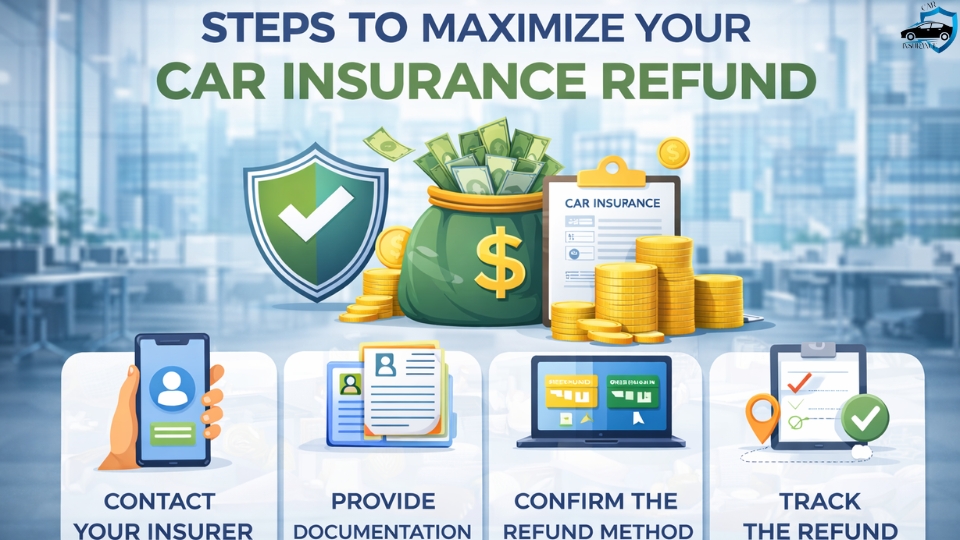
Step 1: Contact Your Insurer
Cancel your policy through:
- Phone
- Online portal
- Written request
Step 2: Provide Documentation
You may need:
- Proof of new insurance
- Vehicle sale documents
- Address change confirmation
Step 3: Check the Method of Refund
Inquire about how and when you will receive your refund for car insurance.
Step 4: Track the Refund
Keep an eye on bank statements or track delivery dates.
If Your Refund Is Delayed
Contact Customer Service
- Keep your policy number and cancellation date on hand
Verify Payment Details
- Confirm your mailing address and bank account information
Escalate the Issue
If delays continue:
- Request a supervisor review
- File a formal complaint
- Contact the State Insurance Department
Refund deadlines can be subject to regulations if violated.
How to Get the Most From Your Car Insurance Refund
- Avoid coverage gaps: Begin your new policy before you cancel the old one.
- Cancel at the right time: Cancel right after you sell a car or change providers.
- Keep written records: Save emails, confirmation numbers, and billing statements.
- Ask about fees in advance: Knowing charges ahead of time helps you get a better estimate on your car insurance refund.
Mistakes to Avoid When You’re E-Filing Your Taxes
Many policyholders leave money on the table due to minor, avoidable errors.
- Canceling without replacement coverage can create gaps and delay refunds.
- Assuming automatic cancellation when a car is sold or an account changes can result in ongoing billing.
- Overlooking balances or fees may reduce your refund until the account is settled.
Review your final statement and correct any discrepancies early to save time and ensure you receive the full unused premium.
How Knowing Refund Policies Gives You the Edge
Insurance is contract law, and insurers follow specific rules when calculating and issuing refunds. Policyholders who understand:
- Refund timelines
- How refunds are calculated
- State rules
…are more likely to get their money quickly and in full. Being proactive — asking the right questions, keeping records, and understanding your legal rights — turns a confusing process into a simple transaction.
The Timing of a Refund May Impact Your Money
The date of your cancellation request can affect your refund. Filing early in the billing cycle usually results in a higher refund, while waiting until the last day of the month or policy term may slightly reduce the amount.
Final Thoughts
A car insurance refund should not be viewed like a bonus — it’s your money for coverage that never ended up being used, said Attig. Understanding when you’re eligible for a car insurance refund, the way your car insurance refund is calculated and what actions you can then take means that control, at least, is in your hands. That information is advantageous to you, and offers some protection against overpaying (or leaving money on the table), as well as from later liabilities if and when it comes time to cancel or modify your coverage.
When you are aggressive about a car insurance refund, at least you will do so with some assurance. By knowing the rules, keeping records and following the correct procedures, you can avoid delays in processing your refund for car insurance or being shorted on the amount of money to which you are entitled. This data can also inform decisions when switching policies or modifying coverage to ensure you get the most out of your car insurance refund.
Whether you’re canceling, switching providers or changing coverage, it just takes a few minutes to reaffirm your car insurance refund rights that can translate into hundreds of dollars. You can capitalize on a larger auto insurance refund by checking your eligibility, reviewing your policy and ensuring payment methods in advance. Staying aware and organized throughout the process will help keep things running smoothly, and get you refunded for money that you already paid toward coverage that you didn’t use.
FAQs Related to Car Insurance Refund
1 . What is a refund of auto insurance?
A car insurance refund is the money you’ve paid to an insurer that’s returned to you if you didn’t make a claim. This usually occurs when you cancel your policy early, or drop a vehicle or make other changes to the coverage.
2 . When can I expect a car insurance refund?
You might be eligible to receive a refund on your auto insurance policy when you cancel mid-term, sell or transfer a vehicle, change your insurance carrier or if an insurer overcharged you. Your policy and state rules will determine your eligibility.
3 . How is car insurance refund calculated?
When refunds are made, insurers typically use either the pro-rata formula that returns unused days of coverage, or an alternative known as the short-rate system, which subtracts cancellation fees. The effectiveness of your repayment method and the timing of your cancellation will also factor into the refund.
4 . How long does it take to get a car insurance refund?
7-14 business days for electronic refunds and 14-30 to receive your refund as a check in the mail. There can be manual review, policy check or wrong bank/mailing information delay.
5 . How can I get the most from my car insurance refund?
Yes. To squeeze the most value out of a car insurance refund, verify your eligibility, ask about credits and discounts that might apply to you, know when to cancel, keep records of communications, and strive to avoid coverage gaps.