
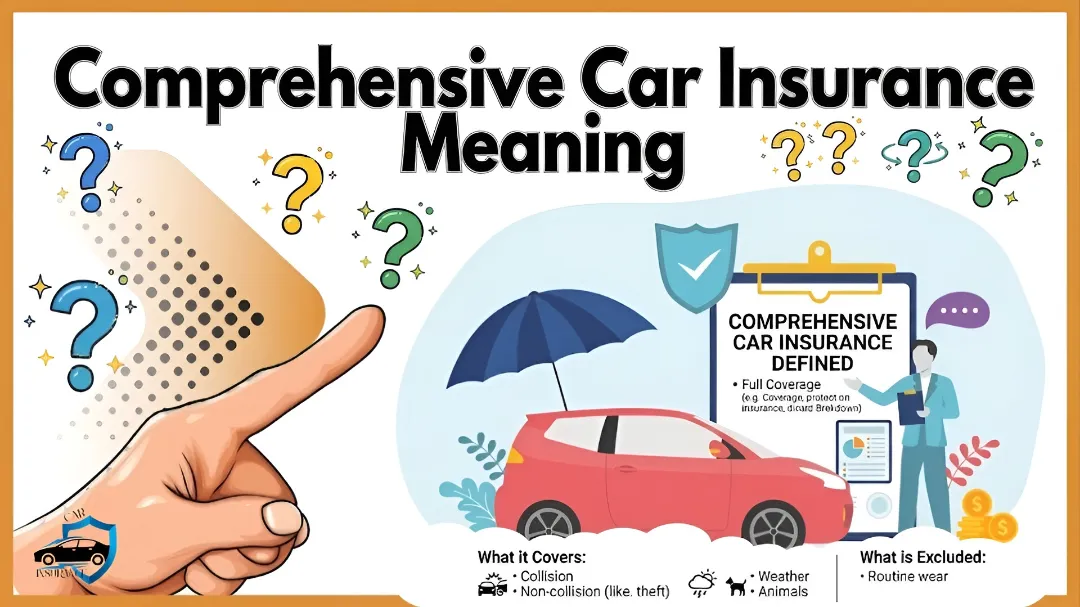
Learn the comprehensive car insurance meaning, what it covers, costs, benefits, and when to buy it. A complete beginner-friendly guide to protect your vehicle from non-collision risks.
Introduction
What auto insurance truly is, how it functions and what to anticipate postcollision are things that go way beyond the question. Most motorists believe that their policy only applies if they crash into another car, while in reality vehicles are exposed to numerous risks every day. There are plenty of other circumstances where your car could be damaged while you’re away from the wheel, too — theft, vandalism and erratic weather conditions included. This is where a good understanding of what full auto insurance means jumps in.
Modern cars and trucks are a huge financial investment, so protecting that investment requires more than just liability coverage. Liability insurance will help pay for damage that you cause to others, but it won’t protect your own vehicle from unexpected, noncollision perils. Catastrophic events — like storms, debris falling, fire or even an encounter with wildlife — can lead to costly repairs or complete loss. However, without the appropriate type of protection in place, these situations can become a significant financial burden.
Another important thing to note is just how often non-collision claims occur. So you have 100 claims so many of them are not accidents and they’ll be reported to several different insurance companies. Hailstorms can destroy hundreds of cars in one place, and car theft remains a problem in urban and suburban areas both. Even benign-sounding things like a windscreen hit by road debris can lead to strange cost. That coverage protects you from having to come out of pocket for situations beyond your control.
The other big point is that different regions have different types of risks. Drivers who live in places that are susceptible to being flooded, burned up in a wildfire or covered in heavy snow might be more likely to have their car be damaged than those living in more temperate regions. Likewise, residents of cities with greater population density may be at higher risk for theft or vandalism. Therefore, the right amount of vehicle protection should always be selected based on your environment, lifestyle and additional worth you assigned to your car.
And financial planning can play a big role here, too. Repairing a vehicle (or getting a new one) can run into thousands of dollars, and not everyone has the dough set aside to cover those expenses suddenly. Insurance that defrays non-accident damage can provide a buffer between you and these expenses. Instead of worrying about an unwelcome financial burden, you can rely on your policy to pay a large percentage of the bill after your deductible.
Understanding how different kinds of auto coverage work together can also help you create a more well-rounded and thorough insurance strategy. Collision coverage deals with damage from accidents, but other forms of protection fill gaps where outside risks are present. That tiered approach enables even more use cases to be covered, so you feel better every single time that you park the car, or get ready to drive it somewhere, or simply leave valuables behind in a non-occupied bubble of the car.
This guide aims to demystify it all when it comes to keeping your car protected from hazards beyond a collision. We’ll explore how this type of coverage works, what kinds of events are typically covered, what factors can influence the price and how to assess whether it’s worthwhile in your specific situation. By the time we’re finished, you’ll not only have an understanding of what it is, but feel more empowered to make good decisions about the right insurance options for you.
Ultimately, making sure you have the right coverage isn’t just about meeting a legal obligation — it’s also about safeguarding your car, your finances and your peace of mind.
What Is Comprehensive Car Insurance Meaning?
Broadly speaking, comprehensive coverage is a type of auto insurance that covers damage to your vehicle resulting from anything other than collisions.
Whereas standard liability insurance is intended to cover others when you cause an accident, comprehensive coverage protects your car from unexpected threats.
Simple Definition
In simple terms, the complete car insurance meaning in of itself is:
Coverage that protects your vehicle from things like weather events, stipulations, theft, fire and so forth vandalism etc.
So Why Know the Meaning of Comprehensive Car Insurance?
Knowing the full meaning of car insurance to best your finances Without it, you may end up paying for damages that would have otherwise been covered.
- Protects against unpredictable risks
- Saves money on major repairs
- Beyond being a continuation of policy
- Provides peace of mind
How Comprehensive Car Insurance Works

To know the full definition of car insurance, you need to know what it covers.
Common Covered Events
- Theft or attempted theft
- Fire damage
- Natural disasters (floods, earthquakes, storms)
- Vandalism
- Falling objects (trees, debris)
- Animal collisions
- Glass and windshield damage
Real-Life Example
Imagine leaving your car parked outside overnight only to have a tree fall on top of it during a storm. You might think to yourself that you aren’t covered without knowing the general comprehensive car insurance meaning — that’s precisely where the comprehensive comes into play.
What Is NOT Covered?
The literal car insurance coverage meaning describes all-encompassing protection, but it has its exclusions:
- Collision-related damage
- Medical expenses
- Damage to other vehicles
- Items taken from the car
- Wear and tear
Comprehensive vs Collision Insurance
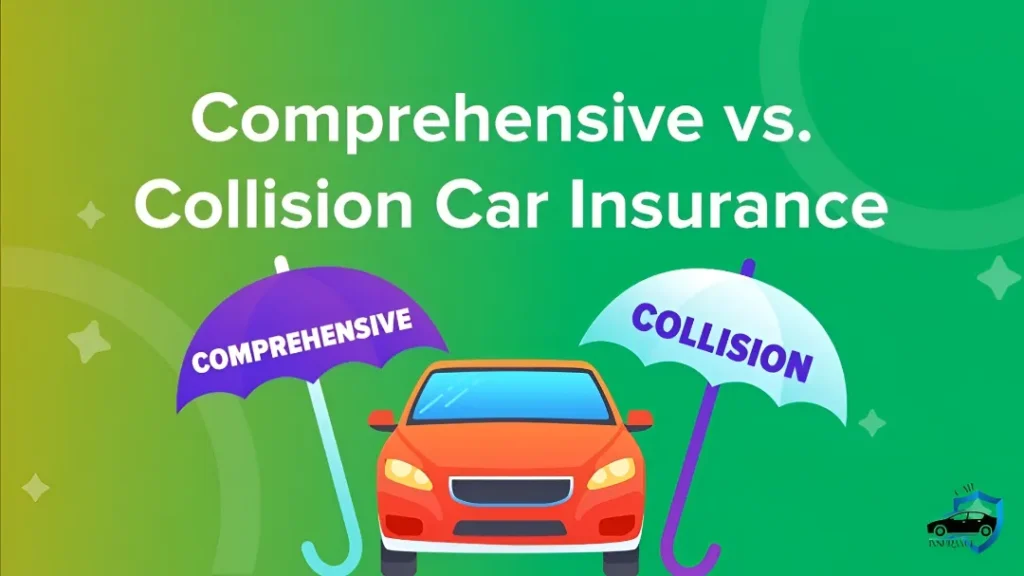
A common confusion arises when comparing policies. Understanding the comprehensive car insurance meaning becomes easier when compared to collision insurance.
| Feature | Comprehensive Insurance | Collision Insurance |
|---|---|---|
| Covers theft | ✅ Yes | ❌ No |
| Covers accidents | ❌ No | ✅ Yes |
| Covers natural disasters | ✅ Yes | ❌ No |
| Covers hitting objects | ❌ No | ✅ Yes |
The comprehensive car insurance meaning revolves around non-collision risks, while collision insurance focuses on accidents.
How Comprehensive Car Insurance Works
To understand car insurance comprehensive definition well, you need to learn about how claims work.
- Aging or damage happens (eg theft, storm)
- You file a claim
- Pay your deductible
- Insurance covers the remaining cost
Understanding Deductibles
If you care to know about the comprehensive car insurance meaning, deductible is one of the significant factors that come into play.
Example:
- Repair cost: $5,000
- Deductible: $1,000
- Insurance pays: $4,000
Cost of Comprehensive Car Insurance
Cost is another factor of the overall car insurance meaning. While this coverage is usually less expensive than a collision, it still gets added to your overall premium and should be weighed carefully.
Full coverage runs around $134–$200 per year for less-than-perfect drivers, but varies widely depending on several factors. Although it can be less expensive then many other types of insurance, the premium that you pay ultimately will depend on your personal risk profile and vehicle details.
The final price depends on those things.
Factors:
- Car value
- Location
- Driving history
- Deductible
What Full Coverage Could Mean On New Car vs Old Car
Familiarizing yourself with how this kind of auto coverage applies to various vehicles is especially useful when you’re choosing between new and used cars. How much protection you need — and what it’s worth to you — will vary widely depending on the make, condition and overall future value of your car. Knowing the car insurance meaning can help you make an informed and cost-saving decision here.
Meaning of Full Coverage for New Cars
For newer cars, full coverage is typically viewed as a must-have. Because new cars have a higher actual cash value, the cost to repair or replace them after incidents such as theft, vandalism or weather-related damage can be quite high. Newer cars are also filled with high-tech features, sensors and unique components — and that can drive repair costs up a lot.
And that’s exactly when coverage for non-collision events is incredibly useful. It provides a financial cushion that ensures you don’t have to pay the full price of unforeseen damages. Most drivers who have acquired their vehicle recently or financed it will want to get full coverage to protect that investment and provide themselves peace of mind.
What does full coverage mean for older vehicles?
The answer isn’t as clear for older vehicles though. The older your car is, the less an insurance claims payout will be worth in market value. If your annual premium and deductible are near—to even above—the current value of your car, having full coverage may not be financially feasible.
In these cases, many drivers simply drop optional coverages and instead stash savings for potential repairs or replacement. Yet this should not be decided by age alone.
MAIN POINT: Are you buying a junk car?
Condition is a hugely influential factor in deciding if coverage is worth it. An older car that is well-kept and still in good shape can use coverage against risks, covering theft to natural disasters. An older vehicle with high mileage or underlying damages, on the other hand, may not warrant such expense.
Other important factors include:
- Your driving habits
- Where you park your car
- Local risks, like crime rates or severe weather
How Your Location Impacts Full Coverage Car Insurance

Your location has a major impact on your goal as far as comprehensive car insurance meaning and sorts in your amplitude.
For example:
- Urban areas -> have higher risk of theft & vandalism
- And coastal areas can see hurricanes or flooding rain
- More rural animal-related accidents
Due to these risks, insurers increase or decrease premiums depending on where you live. Understanding how location impacts the entire insurance definition to cover for automobile insurance is just a way to make sure you know what your options are when you think about coverage.
Understanding Comprehensive Car Insurance & How to Claim it?
Part of understanding the full car insurance meaning is knowing how claims work.
Here’s a simple breakdown:
- Report (theft, damage etc.)
- Step one: Notify your insurer that you intend to file a claim
- Provide necessary documentation
- Pay your deductible
- Pay for repairs or replacement
Thus, this means comprehensive car insurance is not an abstract concept you find on the Internet but something offer real value to you when needed.
Who Should Buy Comprehensive Insurance?
The complete car insurance meaning is important for:
- New car owners
- People in high-crime areas
- Drivers in disaster-prone regions
- Owners of expensive vehicles
- Daily commuters
How to Choose the Right Comprehensive Car Insurance Policy
Choosing the right policy is part of understanding comprehensive car insurance meaning. Not all insurance plans are the same, however, and whether you choose the right one is often based on your life situation and finances.
When evaluating policies, consider:
- Coverage limits and exclusions
- Deductible options
- Insurance provider reputation
- Available add-ons and customization
The necessity of a rightly chosen approach for complete car insurance meaning unfolds where you need this most.
Common Mistakes To Avoid When Buying Comprehensive Insurance

So many drivers simply don’t bother to learn about comprehensive car insurance meaning, and in not doing so they could be making costly miscalculations. Avoiding these missteps will help you get the most value from your policy.
Some common mistakes include:
- As long as it covers everything, types of damages
- Choosing a deductible that is too high or too low
- Not reviewing policy exclusions
- Irrespective of the respective worth of the car
Understanding the full story of car insurance meaning can help you avoid pitfalls like this and better position yourself to leave with your policy making an informed decision.
The Importance of Comprehensive Insurance and How It Saves You Money In the Long Run
All that said, what you learn here about car insurance will serve you better in the long run than simply armoring yourself with tidbits of immediate knowledge that allow for a potentially hasty repair. And this matters in the context of protecting your wealth over decades.
Here’s how:
- Prevents large unexpected expenses
- Helps maintain your car’s value
- Provides consistent financial security
- Reduces stress during emergencies
You know very well the meaning of full car insurance that is why by just spending money to find a good coverage it is to you to become an investment fund for your lifelong stability.
Benefits of Comprehensive Car Insurance
- Financial protection from unexpected events
- Coverage beyond accidents
- Peace of mind
- Protection against theft and disasters
Drawbacks to Consider
- Additional cost
- Not ideal for very old cars
- Doesn’t cover collisions
Is Comprehensive Insurance Worth It?
This demonstrates the importance of having comprehensive car insurance if one cannot afford such unexpected repairs.
When Should You Skip It?
- Low-value car
- You can afford repairs
- Low risk area
Add-Ons That Enhance Coverage
- Zero depreciation
- Engine protection
- Roadside assistance
- Return to invoice
Tips to Save Money

- Choose higher deductible
- Maintain clean driving record
- Compare providers
Real-Life Scenarios
- Theft → Insurance pays
- Flood damage → Covered
- Vandalism → Repairs covered
Final Thoughts
Auto insurance isn’t just the law, or protection for yourself if you are in an accident; It’s a moment that most people have to prepare for even though it is uncommon and can come out of nowhere. There are many risks that drivers commonly overlook — from damage from sudden weather to theft or acts of vandalism. This is why it is important to understand the full car insurance meaning. It extends beyond the limitations of basic coverage and safeguards your vehicle from a wider array of real-world hazards.
The advantages of holding this type of protection is just the more transparent once you also consider what it costs to fix or constantly replace a car. Depending on the total cost of car repairs, they could end up costing you a pretty penny out of pocket, especially for newer vehicles or cars that still have a fair amount of value. Protection for non-collision events removes you from being at the mercy of these risks, with a guarantee you’ll not end up out of your depth covering costs if there is a loss. This added level of protection can be crucial in both short-term crises and also your long-term financial strategy.
Your own situation also plays a role in finding whether this coverage makes sense. Location, how often you drive and how much your vehicle is worth all play a role. For some drivers — especially those who live in high-risk areas or have newer models — this protection can be a certain wise and practical choice. For some people with older cars, it may take slightly more careful cost-benefit analysis. Knowing and understanding your options, in either case, let’s you make a more informed choice.
Ultimately, any insurance policy is about peace of mind. Being able to know that your car will get through unscathed from some freak accident or circumstance allows you to go about life day to day without having that constant question looming over you. Knowing the detailed comprehensive car insurance meaning, you will now be in a position to choose the cover that’ll suit your specific needs and budgets — making it a worthy element of the context of your personal financial wellbeing.
FAQs Related to Comprehensive Car Insurance Meaning
1 . What is comprehensive car insurance?
Fully comprehensive car insurance is cover which protects your vehicle against damage that’s not caused through a collision (or another accident), including theft, fire, natural disasters, vandalism and falling objects.
2 . Does comprehensive insurance cover accidents?
No, comprehensive insurance does not cover damage from accidents or collisions. That’s where collision insurance comes in.
3 . Is comprehensive car insurance mandatory?
No, comprehensive coverage is typically not required. If your car is financed or leased, however, your lender may require it.
4 . Comprehensive coverage — what’s covered?
It usually covers theft, fire, flooding storms, vandalism, animal damage and glass or windshield damage.
5 . Should Older Cars Carry Comprehensive Insurance?
It’s based on the value of the car. If insurance is nearly as much or more than the car’s worth on the open market, it may not make sense.