
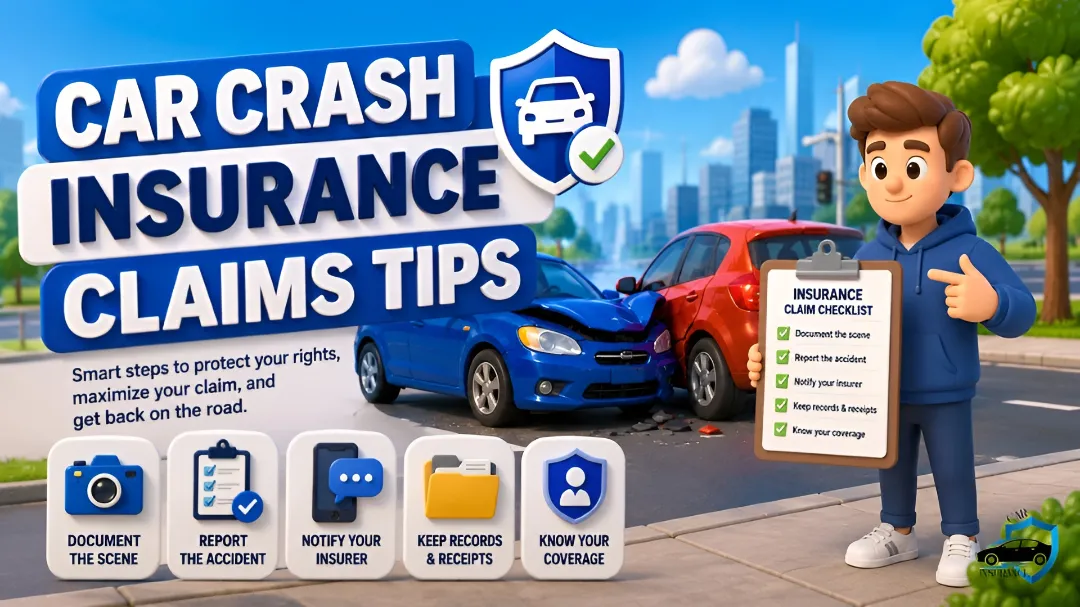
Learn all you need to know about automobile crash insurance claims, from submitting a claim to negotiating a settlement to how to value a claim to insurance adjusters to liability coverage to getting paid to insurance coverage to help you get the most money for your accident.
Introduction
Car Crash Insurance Claims A car accident can occur in an instant but can have effects that last for months or even years. After an accident, there are lots of problems for accident victims to deal with, including: medical costs, vehicle damage, lost income, emotional strain, and more. The first thing to learn during the recovery process is how an automobile crash insurance claim functions and how to do it successfully.
Insurance should offer financial security but the claims process isn’t necessarily easy. Claim filing is a process that can require a lot of evidence collection, insurance adjuster communication, damage documentation and settlement negotiation. Many people may end up suffering delays, claims denied or settlements that are not full of their losses if they don’t know the procedure.
A significant number of motorists think that insurance companies will just provide appropriate compensation. But insurers are companies that try to pay out claims as little as possible, when they can. Understanding your rights and how claims are assessed can help you prevent making expensive errors and maximise the chances of you getting the compensation you deserve.
No matter what kind of accident you are having with an auto or truck, knowing what to anticipate when car accident insurance claims occur can be very useful in your case. This guide will help you learn about the process of filing, insurance investigations, valuing your claim, negotiating a settlement, your rights, and valuable tips for getting the best outcome.
Understanding Car Crash Insurance Claims
Car crash insurance claims are a claim to an insurance carrier for reimbursement after the occurrence of a motor vehicle accident. These assertions may be:
- Health care cost
- Automobile repair expenses
- Damage to property
- Loss of earnings
- Pain & Suffering
- Rehab costs
- Future medical care
- Emotional Injury
Insurance claims for automobile crashes are meant to assist those injured or damaged in a car catastrophe get back on their feet financially.
This claim may be with your own insurer or with the other driver’s insurer, depending on the circumstances.
Why Car Crash Insurance Claims Matter
If you don’t submit an insurance claim properly, it can be hard for accident victims to get money back for what they’ve lost.
- A successful claim can help pay for:
- Treatment at the emergency room
- Emergency Ambulance Services
- Physiotherapy
- Vehicle replacement cost
- Loss of earning ability
- Long term disability costs
Because major accidents can have a significant financial impact, it is important to understand the insurance claims process.
Types of Car Crash Insurance Claims

Several different claim types exist depending on the accident circumstances.
First-Party Insurance Claims
Your own insurance company files a first-party claim.
Examples include:
- Claims for collision coverage
- Claims for Personal Injury Protection (PIP)
- Medical payments coverage claims
- Motorist denies having no insurance
- Claims for under-insured motorists
1st party car crash insurance claims are common when your policy provides direct benefits regardless of fault.
Third-Party Insurance Claims
The other driver’s insurance company is served with a third party claim.
The most common time to make these claims is when the accident was caused by the negligence of another motorist.
Compensation for third party claims may include:
- Healthcare bills
- Loss of earnings
- Damage to vehicle
- Pain & Suffering
- Mental Torment
Uninsured Motorist Claims
Unfortunately, some drivers drive without insurance.
If you’re hit by an uninsured driver, you may have to file an uninsured motorist claim with your own insurer.
Claims for such automobile accident insurance are a vital safety net for responsible drivers who lack sufficient coverage.
Underinsured Motorist Claims
Sometimes the at-fault driver’s coverage limit won’t be enough to pay your damages.
Underinsured motorist coverage helps close the gap between your losses and the available insurance coverage.
What To Do Immediately After an Accident
The actions you take immediately after a crash can significantly affect your claim.
Ensure Safety First
If possible get to a safe place and summon emergency services if anyone is hurt.
Even if injuries appear minor, get medical assistance right away.
Some injuries can cause symptoms to appear hours or days after an accident.
Contact Law Enforcement
Police report is a great evidence to have for automobile crash insurance claims.
The report can include:
- Statements from drivers
- Witness details
- Road conditions
- Preliminary fault diagnostics
Police reports are also used often in investigations by insurance adjusters.
Gather Evidence
You have a solid case with good proof.
Assemble:
- Photos of automobile damage.
- Photos of wounds
- License plate numbers
- Driver info
- Policy information
- Contact details for witnesses
- Road conditions photographs
The more documentation you have, the stronger your case will be.
Avoid Admitting Fault
Do not acknowledge to any blame at the accident scene.
Insurance companies may even misinterpret simple remarks such as “I’m sorry.”
Let the investigators see who is liable on the basis of evidence.
How the Insurance Claims Process Works
Many accident victims wonder what happens after filing a claim.
Step 1: Report the Accident
Please call your insurance company first thing in the morning.
Most insurers require immediate notification after an accident.
Provide factual information not guesswork.
Step 2: Claim Assignment
The insurance company sends an insurance adjuster to investigate your claim.
The adjuster is your main contact point during the procedure.
Step 3: Investigation
Insurance companies evaluate every claim extremely carefully.
The investigation may involve:
- Review of police reports
- Patient chart review 3.
- Interviewing eyewitnesses
- Motor vehicle damage assessment
- Liability: evaluation
- Looking at photos
Step 4: Damage Assessment
The insurance adjuster thinks:
- Hospital bills.
- Property damages
- Lost revenue
- Costs of future care
- Suffering and pain
This is used to assess settlement value.e.
Step 5: Settlement Negotiation
After examining evidence, the insurance company may make a settlement offer.
First offers are usually less than what the claim is really worth.
Most vehicle crash insurance claims will involve some bargaining before a final payment is reached.
Understanding Fault and Liability
Fault plays a major role in many insurance claims.
Fault States
In blame states, the driver at fault and his insurance carrier are responsible for damages.
A victim might also sue the negligent driver’s insurer for compensation.
No-Fault States
In no-fault states, drivers usually seek compensation from their own insurance coverage regardless of who was at blame in the accident.
Usually Personal Injury Protection coverage applies in these types of cases.
Comparative Negligence
Most states have comparative negligence rules.
If you are partially at blame for the accident, your compensation may be reduced in proportion to your percentage of fault.
For instance:
- Total damage: 100,000 dollars
- Your error: 20%
- Compensation: 80,000 $
Understanding comparative negligence when analysing an insurance claim for vehicle crashes.
Common Causes of Car Accidents
If you want to determine who is liable, you have to determine what caused the accident.
Common causes are:
Distracted Driving
Distraction while driving continues to be one of the primary causes of crashes.
Examples:
- Texting and driving
- Use of phone
- GPS distractions
- Eating in the car
Speeding
Speed = longer stopping distance = more serious crashes.
Insurance investigations often focus on evidence relating to speed.
Drunk Driving
Alcohol-related crashes can result in severe injuries and considerable damage.
In some countries these lawsuits may include punitive damages.
Reckless Driving
Examples of aggressive driving behaviours include:
- Tailgate
- Dangerous lane changes .
- Rage on the road
- Red light running
Evidence of reckless conduct may be used to support claims of liability.
Medical Expenses and Injury Compensation
Medical charges are usually the biggest part of automobile crash insurance claims.
Such recoverable medical expenses may include:
- emergency department visits
- Hospitalisation Surgery
- Prescription medications
- Physiotherapy
- Chiropractic Care
- Rehabilitation services
- future medical treatment
Complete medical records are necessary to maximise compensation.
Lost Wages and Income Recovery
Accident victims sometimes lose time from work owing to injuries.
Compensation can include:
- Lost earnings
- Bonuses missed
- Lost commission
- Decreased earning capacity
- Loss of future earnings
Proper employer paperwork backs up claims like this.
Pain and Suffering Damages
Pain and Suffering Compensation for Non-Economic Damages
Like so:
- Physical pain,
- Psychological trauma
- Anxiety .
- Depression PTSD
- “Loss of enjoyment of life”
Often insurance firms would estimate these damages by using multiplier approaches.
The multiplier is usually between 1.5 and 5, depending on how bad the injury is.
Vehicle Damage Claims
Vehicle damage claims are intended to pay car accident victims for damages to their vehicle when they have been involved in an accident. The cost of property damage may consist of:
- Vehicle repair expenses
- Vehicle replacement costs
- Costs associated with renting cars during the repair process
- The tow and roadside assistance fees
- Vehicle storage fees
- Damage to the interior of the car
Once the claim is submitted, the insurance adjuster will go out and inspect the vehicle and determine the damage. They can read repair quotes, photos, accident reports and mechanic assessments to decide on what the insurer should pay for the repairs. The insurance provider could ask for several quotes for repairs before approving a claim.
The insurance company will likely pay for the repair, as long as it is not too expensive, in accordance with the policy limit and deductible. If the cost of the repairs is more than, or close to, the fair market value of the vehicle, however, the insurance company may consider the vehicle to be a total loss. In that case, the insurance company generally compensates the market value of the vehicle imm.ediately before the accident rather than funding the repairs.
How Insurance Adjusters Evaluate Claims
When insurance adjusters assess vehicle crash insurance claims, they take a variety of criteria into account.
They include:
- Severity of injury
- History of medical treatment
- Proof of liability
- Damage to vehicle
- Testimonies
- Policy limits
- Future health needs
Learn the adjuster’s evaluation procedures to assist build a better claim.
Errors That May Be Damaging Your Claim
Try to avoid the following pitfalls that may limit or even lose you your compensation:
Delaying Medical Treatment
Insurance companies will likely say that the injury occurred too late to be serious or it wasn’t caused by the accident. Getting immediate medical treatment also establishes valuable records for your claim.
Recorded Statements Without Preparation is a technique for obtaining statements from the other party to an accident.
Adjusters can ask questions that help to limit the amount of responsibility or lessen the amount of your claim. Giving a recorded statement without knowing your rights can result in remarks that can be used against you in the future.
Accepting Early Settlement Offers
Initial settlement offers are frequently made prior to knowing the true injuries, medical expenses, lost income or future expenses. If you take it too early, you might not be able to qualify for more compensation in the future.
Posting on Social Media
Photos, videos, comments and location check-ins can be removed from context and used to challenge injuries or the extent of the injuries, and the effect of the accident on your life by insurers.
Missing Deadlines
All claims have to meet reporting deadlines, insurance deadlines and statutes of limitation. By failing to meet these crucial deadlines, you risk losing your case or getting no compensation at all.
The failure to collect evidence.Lack of evidence collection.
The failure to obtain photos, witness information, police documents or medical records can complicate the proof of liability and damages. Evidence can be a significant factor in maximizing a claim, especially if it is strong.
Not following medical advice
If you miss appointments, do not follow treatment guidelines, or don’t finish your rehabilitation, then it may be a good argument for an insurer to argue that your injuries are not as severe as they claim.
Claiming a greater extent of injury or damage.Oversizing injuries or damages.
Giving false information will jeopardize the claim and your credibility. Be truthful and consistent about your injuries and losses.
Too Early to repair or dispose of Damaged Property
Any damage to vehicles or other property could be relevant. Not having them repaired, sold or disposed of according to the procedures may make it more difficult to present your case.
Complex Claims, Without Professional Advice
A serious injury case, disputed liability and multi-vehicle accidents can be complicated legal and insurance matters. Not getting professional advice can mean receiving less compensation than you’re worth.
Conclusion
Car collision insurance claims can be more difficult than they are at first made it look, and grasping the process can make a huge difference to the effects of your claim. All the steps involved in filing an IME, documenting injuries and communicating with insurance companies and negotiating settlements are crucial to ensure your case is handled properly, and that you receive the maximum possible compensation for your injuries.
The clearer you are regarding auto accident insurance claims, the better ready you’ll be to deal with unforeseen challenges and stay clear of typical errors that could decrease the value of your case. Each insurance company has its own protocol and priorities, and understanding your rights and responsibilities can ensure you’re fairly treated throughout the process.
From medical costs to lost wages to vehicle repair and property damage to pain and suffering, being organized and thorough will assist in a strong claim. Learning how to streamline the claims process, knowing your options, and seeking expert advice when needed can help you feel more confident and increase your chances of a fair and successful resolution.
FAQs Related to Car Crash Insurance Claims
1 . Given the response time of your insurance company, within how many days should you report the car accident?
The accident should be reported as early as possible, within 24-48 hours. Evidence is maintained, policy requirement are met and delays do not impact on insurers’ ability to investigate the claim.
2 . How can I prevent the insurance company from filing a lawsuit against me?
Not necessarily. Often you will make initial settlement offers before the complete scope of your injury, vehicle damage, loss of wages, and future expenses are known. Read the offer carefully and be sure it will compensate you for everything you are losing before accepting a settlement.
3 . What’s most crucial to a car accident insurance claim?
The photos of the accident scene, the vehicle damage, medical records, police reports, witness statements, repair estimates, and lost income evidence are all crucial parts of the case. The more robust your evidence, the clearer you’ll be in establishing liability and the more you’ll be compensated.
4 . Does social media have an impact on my car accident claim?
Yes. Insurance companies could look at your social media postings, photos, or comments to determine whether they go against your injury claims. In the claims process, people should try to minimise social media activity because anything they post can be misinterpreted, with innocent posts potentially being used to discredit you.
5 . When do I need to hire a car wreck lawyer?
It is advisable to seek legal counsel if you are severely injured, there is a dispute about who is at fault, several different parties are involved, or the insurance company has provided an unfair settlement. A professional lawyer can defend your rights, represent you in negotiations and ensure that you receive the highest possible compensation.