
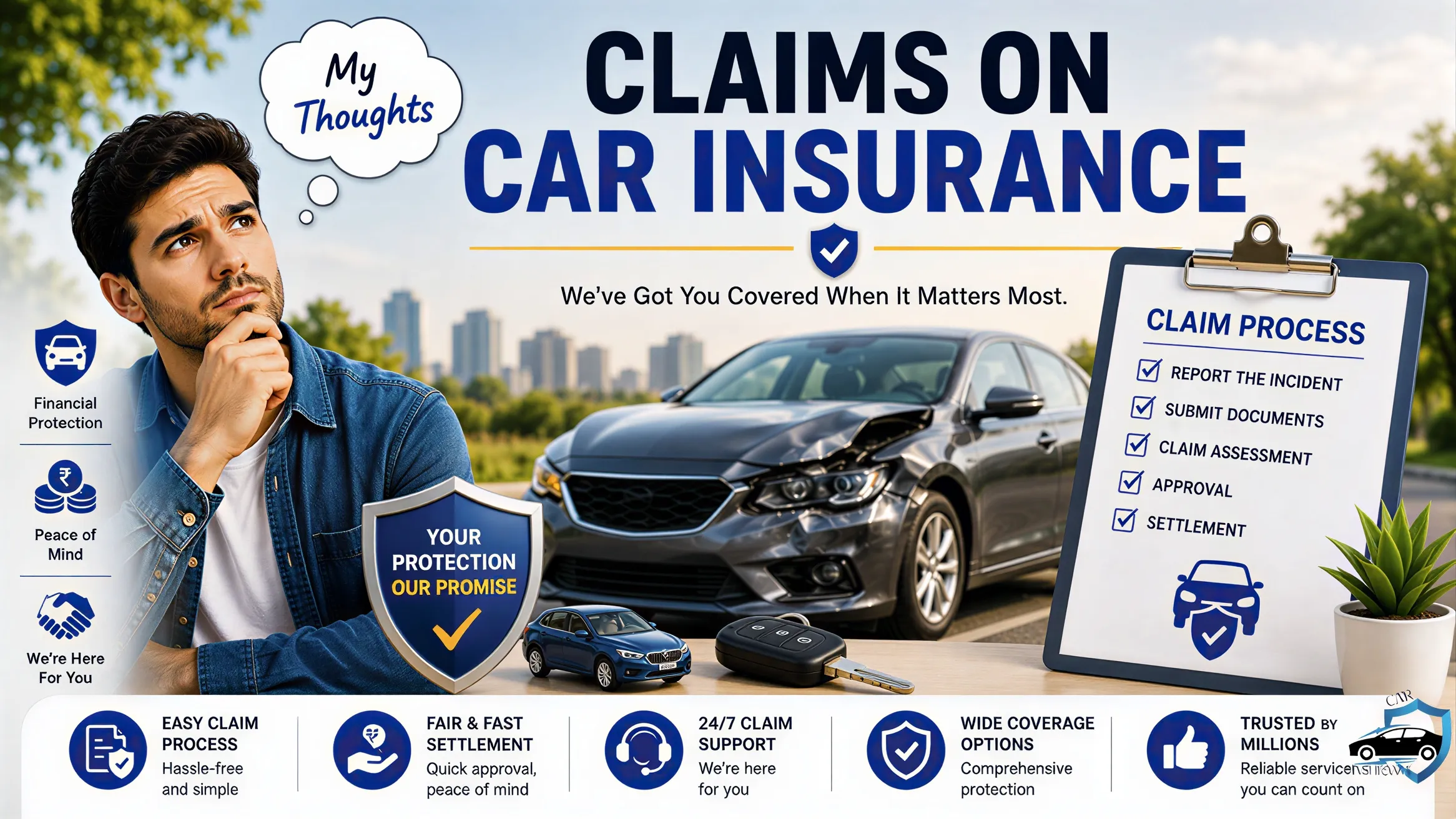
Learn all the ins and outs of Claims on Car Insurance, how to file a claim, tips for claiming, insurance adjusters, deductibles, common claim pitfalls, and how to get the most out of your claim after an accident.
Introduction
No driver would ever want to have to get a claim on car insurance, but most car owners will need to make at least one claim throughout the course of their insurance policy. A minor fender-bender, a serious accident, or vehicle theft, vandalism or weather damage can make understanding how claims on car insurance work pay off in terms of your time, money and stress levels. Understanding the steps to take after an accident can make the claims process a lot smoother.
Sadly, many drivers only discover about insurance claims after an accident has taken place. This is where feelings are running high, repairs are necessary and dealing with insurance paperwork can be overwhelming. That’s why it is crucial to have a basic understanding of the process in advance. The key to avoiding common errors, minimizing delays, and maximizing your potential payout is to be prepared.
While auto insurance can offer a safety net in the event of an unexpected incident, making a claim can be more than just raising the alarm. Insurers typically conduct a thorough examination of the accident, review evidence, determine damages and assess liability before authorising compensation. The more you know about claims on car insurance, the smoother these steps will roll.
This guide will tell you how to file a claim, how fault is determined, what an insurance adjuster does, common claims denied, and how to make the most of your claim. At the end, you’ll understand the claims process and have the ability to better secure your assets during an accident.
What Are Claims on Car Insurance?
A claim on a car insurance policy is a formal request to the insurance company for reimbursement following a loss or accident covered by the policy.
In the event of an insured event, the policyholder informs the insurance company, and presents the insurance policyholder with proof of damage. The insurance company then investigates and decides if the damages are covered by the policy or not.
Typical situations that cause claims are:
- Car accidents
- Vehicle theft
- Vandalism
- Fire damage
- Flood damage
- Hail damage
- Falling objects
- Hit-and-run incidents
- Personal injury claims
- Property damage claims
Claims on car insurance are meant to alleviate financial losses that can occur when an unforeseen event occurs.
How one understands claims on car insurance is important.
A lot of motorists buy insurance policies because it’s a legal requirement. But, having knowledge of your policy and claims process can have tremendous benefits.
Knowing what is covered in auto insurance claims can make you feel more at ease with the process and enhance your benefits, including:
- Faster claim processing
- Improved relationships with insurers.Improved communication with insurer.
- Improved prospects for fair compensation.
- Reduced claim delays
- Gain greater knowledge of legal rights.
- Improved settlement outcomes
- Reduced stress in disaster situations.
One of the greatest weapons you can use against insurance companies is knowledge.
Types of Claims on Car Insurance
All claims are not equal. The different coverages depend on the situation.
Collision Claims
collision claims include those relating to damage to your car in a collision involving:
- Another vehicle
- A guardrail
- A tree
- A fence
- A building
- Road barriers
This coverage is in place regardless of who was at fault, as long as the terms and conditions of the policy are met and the deductible is paid.
Comprehensive Claims
Full coverage covers non-collision incidents.
Examples include:
- Theft
- Fire
- Floods
- Hailstorms
- Vandalism
- Falling objects
- Animal collisions
Full coverage insurance claims are generally less likely to impact insurance rates as compared to at fault insurance claims.
Liability Claims
The liability coverage pays for damage you cause to others.
This may include:
- Medical expenses
- Vehicle repairs
- Property damage
- Legal costs
In most states liability insurance is mandatory.
Personal Injury Protection Claims
Personal Injury Protection (PIP) can assist reimbursing for the following:
- Medical expenses
- Lost wages
- Rehabilitation costs
- Essential household services
PIP is frequently found in “no fault” states.
Uninsured Motorist Claims
Not all drivers can have sufficient insurance coverage.
Uninsured motorist coverage can help pay for damages if you’re involved in an accident with:
- Uninsured drivers
- Underinsured drivers
- Hit-and-run drivers
This kind of safeguarding may be very beneficial.
Immediately after an accident, the following are the steps that should be taken:
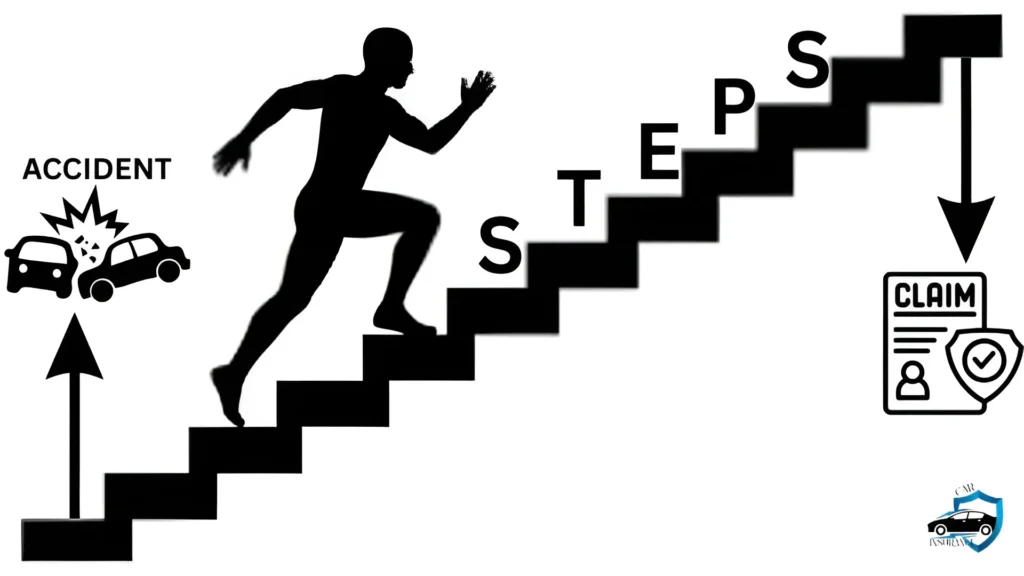
Time is of the essence following an accident.
Prioritize Safety
Check yourself and others for injuries.
If anyone is hurt:
- Contact emergency services ASAP.
- Follow medical advice.
- Do not leave the scene until police are on the scene.
Security is always priority one!
Gather Important Information
Gather information from everyone concerned, such as:
- Names
- Phone numbers
- Addresses
- Insurance information
- License plate numbers
A success car insurance claim is dependent on accurate information.
Take Photos
Record using your cell phone:
- Vehicle damage
- Road conditions
- Traffic signs
- Weather conditions
- Skid marks
Images can be important evidence in a claim investigation.
Speak With Witnesses
Witnesses who are not connected to the case can bolster your case.
Ask for:
- Names
- Contact information
- Observations in the form of statements
Witness testimony can be helpful in proving liability.
How to File Claims on Car Insurance
If you know what to expect, the claims process is typically simple.
Report the Accident
Call your insurance company right away.
There are numerous companies that will accept claims:
- Mobile apps
- Online portals
- Phone calls
- Insurance agents
When it comes to claims, timely reporting can help get things done quicker.
Step 2: Give Correct Information
Be factual and candid about the incident.
Include:
- Date and time
- Location
- Weather conditions
- Description of events
Do not make assumptions or embellish details.
Step 3: Submit Supporting Evidence
The insurance company may ask for:
- Photos
- Police reports
- Medical records
- Repair estimates
- Witness statements
The more evidence you include, the more convincing your statement will be.
Work with the investigation (Step 4)
Claims are investigated to establish damages and liability by the insurance company.
There is a possibility for avoiding delays through cooperation.
Knowing what to expect from the Insurance Adjuster.
The insurance adjuster is a pivotal figure in the process of assessing claims related to car insurance.
Their responsibilities include:
- Reviewing accident reports
- Inspecting vehicle damage
- Assessing repair costs
- Determining fault
- Calculating settlement values
Adjusters can be employed directly by an insurance company or they can be self-employed.
Having an understanding of their role aids policyholders in their communication throughout the process.
How Fault Is Determined
One of the major components of a claim is establishing responsibility.
Insurance companies evaluate:
- Police reports
- Witness statements
- Vehicle damage
- Traffic laws
- Accident scene evidence
Comparative negligence rules are adopted by many states.
Comparative negligence allows for several people to be at fault in an accident.
For example:
- Driver A is 80% responsible.
- Driver B is 20% responsible.
However, Driver B can still receive compensation, although that amount may be decreased by the percentage of fault he is responsible for.
Documentation is key!
Having good documentation is one of the most crucial elements to successful claims on car insurance. Evidence is an essential part of the insurance company’s case when determining who was at fault, the nature of the damage, and how much they can settle for. Keeping your record organized and detailed will make it easier to establish your case and avoid needless disputes. Having proper documentation can also help to streamline the claims process and ensure you receive fair compensation.
Accident Reports
Police reports can be a very valuable independent source of evidence, and can bolster your claim greatly.
The accident reports may contain some important information such as:
- The date and time of the accident.Date and time of accident.
- The site of the accident is unknown.
- Names of drivers involved.
- Vehicle information
- Officer observations
- Traffic violations issued
- Witness statements
- Accident diagrams
- The road and weather conditions are both a factor.
They are a critical report for insurance companies to consider when deciding liability.
Medical Records
Medical records are crucial to establishing that you were injured as a direct result of the accident.
Medical records should contain:
- Emergency room records
- Doctor evaluations
- Hospital discharge papers
- Diagnostic test results
- A combination of X-rays and an MRI report.
- Prescription records
- Physical therapy reports
- Medical bills
- Treatment plans
- Follow-up appointment records
When seeking bodily injury compensation, it is crucial to maintain comprehensive medical documentation.
Repair Estimates
Professionally done repair quotes are a proof of damages to the vehicle and the anticipated repair price.
Useful documentation for repairs:
- Repair shop estimates
- Parts replacement costs
- Labor charges
- Vehicle inspection reports
- Damage assessments
- Towing invoices
- Rental car receipts
- Final repair invoices
- Before-and-after repair photos
If there are disagreements about the settlement, you can also get several quotes.
Communication Records
If disagreements happen during the claims process, they can be kept under control by having a record of all communication.
Maintain records of:
- Emails
- Letters
- Phone conversations
- Claim numbers
- Adjuster names
- Settlement offers
- Repair authorizations
- Claim status updates
- An explanation in writing by the insurer.
- Record write-up from meetings and discussions
You can keep these records well organized in a simple notebook or a digital file.
Photographs and Video Documentation
Sometimes the best documentation is in the form of visual evidence.
Make photos and videos of:
- Vehicle damage
- Accident scene
- Skid marks
- Road conditions
- Traffic signs
- Weather conditions
- Injuries sustained
- Property damage
Distribute and share the results of the simulation across the class.
Evidence that is easy to see will make the telling of your version of events a lot easier.
Witness Information
Evidence from independent witnesses can be useful to support your claim.
Collect:
- Full names
- Phone numbers
- Email addresses
- Written statements
- Observations recorded (where legally possible)
When there is doubt about who is at fault, witness testimony can be very helpful.
Keep Everything Organized
Have a special file for all documents related to the accident. Include:
- Police reports
- Medical records
- Repair estimates
- Photos
- Receipts
- Communication logs
- Insurance correspondence
To be organized can make a significant difference in the outcome of a claim, as well as make it easier to ensure that pertinent evidence is available when it is needed.
Repair Estimates and Vehicle Repairs
The vast majority of insurance companies will need repair estimates before they will pay the amount.
Multiple Estimates
Insurers may request more than one estimate.
It is important to make a comparison of the estimates to arrive at a reasonable estimate of the repair costs.
Choosing Your Repair Shop
Typically, you can select the repair shop in which you want your repair work to be carried out.
If the store you select has an amount higher than the insurer’s rates, though, you may have to cover the difference.
The difference between OEM and Aftermarket Parts.
- OEM parts: parts produced by the original vehicle’s manufacturer.
- Aftermarket parts are third party parts.
OEM parts may be more expensive but might be a better fit and finish.
Rental Car Reimbursement, what it is, and how it works.
For a lot of accidents, drivers are left without means of transportation.
Rental reimbursement coverage is used for paying for temporary transportation until repairs are completed.
Insurance may be applicable based on:
- Policy terms
- Claim type
- Repair timelines
When renting a car, always check with your insurance provider what is covered.
Understanding Deductibles
The initial amount you have to pay before the insurance coverage kicks in.
For example:
| Item | Cost |
|---|---|
| Repair cost: | $4,000 |
| Deductible: | $500 |
| Insurance payment: | $3,500 |
The higher the deductible, the cheaper the premiums, and the lower the deductible, the higher the premiums.
What happens if my car is Totaled?
It is determined that a vehicle is a total loss if the repair costs are greater than a substantial percentage of the value of the car.
Insurance companies evaluate:
- Vehicle age
- Condition
- Mileage
- Market value
In the event of a total loss, the insurance company will usually pay off the car for its actual cash value.
Take the time to check the valuation before taking an accepted settlement.
A few common reasons for car insurance claims getting denied.
Only some claims are approved.
Policy Exclusions
Some events might not be covered by your policy.
Missed Deadlines
Late reporting may lead to difficulties.
Insufficient Evidence
Claims may be undermined by a lack of documentation.
Fraud Concerns
Denial may result if false or misleading information is given.
Coverage Lapses
Coverage is typically limited to claims made before the expiration of the policy.
Knowing about these issues will assist you in preventing issues.
How to Negotiate a Better Settlement
Insurance settlements can be settled via negotiations.
Check the Offer carefully.Consider the offer thoroughly.
Compare the settlement with:
- Repair estimates
- Medical bills
- Vehicle values
Present Additional Evidence
A higher settlement will be warranted if there is strong evidence in support.
Request Written Explanations
Request from adjusters that they explain the calculations and deductions.
Remain Professional
Often it’s possible to communicate in a more polite and professional manner than by arguing in an emotional way.
What to Do If You Disagree with the Insurance Company
Disagreements sometimes happen.
Possible options include:
Communicate With a Supervisor
Escalating the matter may lead to a review.
Use an Appraisal Clause.Employ an Appraisal Clause.
Dispute resolution policies are incorporated in many policies.
Please call Your State Insurance Department
Sometimes regulators can help in resolving complaints.
Seek Legal Advice
If it’s a major dispute, there could be a need for legal help.
What ways do claims impact on insurance premiums?
A lot of people are concerned about rising insurance costs for their car.
The rates may be influenced by:
- Fault determination
- Claim severity
- Claim frequency
- Driving history
In general, at fault claims will have a more significantly effect than comprehensive claims.
If you make repeated claims, your premiums could increase.
Hit-and-Run Claims
It can be particularly frustrating in cases of hit-and-run.
If you get involved in a hit-and-run:
- Call police immediately.
- Gather witness information.
- Take photographs.
- Notify your insurer.
If the driver cannot be determined, uninsured motorist coverage may be available.
Stolen Vehicle Claims
Vehicle theft is a serious matter that needs to be addressed immediately.
Steps include:
- Notifying the police of the robbery.
- Contacting your insurer
- Providing vehicle information
- Helping with the inquiry
Typically, comprehensive coverage will apply to claims involving theft.
Weather and Natural Disaster Claims
Extensive damage to vehicles can happen with severe weather.
Typical events that should be covered include:
- Hail
- Windstorms
- Flooding
- Falling trees
- Lightning damage
Such losses are usually covered by comprehensive coverage.
Here are some tips to get the most out of a claim settlement:

A good compensation doesn’t fall into your lap. Your response to an accident and during the claims process will determine the extent of the compensation you receive. Insurers consider a claim based on the evidence, documentation and coverage of the insurance policy. There are a few smart strategies that you can follow to ensure that you come out with the best possible outcome for a settlement.
Report the Incident Quickly
Timely reporting of the accident is among the most vital things you can do. Faster reporting will help retain critical evidence and enable the insurance company to begin the investigative process before things become too fuzzy.
There are complications with delaying a claim because:
- Memory of the witnesses may be limited.
- Physical evidence may be lost.
- The delay could raise some eyebrows for insurance companies.
- The cost of repairs could rise in the future.
The quicker you contact your insurance company, the easier your claim is likely to be.
Document Everything
Well documented cases can make the difference between a satisfactory settlement and a superb one. Obtain all the evidence as quickly after an accident as possible.
Important documentation includes:
- Images of car accidents.Photos of car accident damage.
- Videos of the accident scene were shown for the first time.
- Police reports
- Witness statements
- Medical records
- Repair estimates
Comprehensive documentation provides proof of your losses and makes it easier to support your claim.
Save Receipts
There can be many expenses associated with an accident that may be covered, but not unless you have the proof to support it. Save all receipts relating to the accident.
Important receipts include:
- Towing services
- Rental vehicles
- Temporary transportation
- Vehicle storage fees
- Repair costs
- Medical expenses
- Prescription medications
It’s a good idea to have a folder for them to keep things neat and tidy.
Get immediate medical help
If you suffer injuries, seek medical treatment as soon as possible. Not only would this impact your health but would also make your injury claim weaker.
Early treatment is beneficial:
- Document injuries properly
- Make a link between the accident and injuries
- Avoid having your claim investigated by insurance companies.
- Facilitate future settlement talks
Follow treatment recommendations by your health care provider and make copies of all medical records.
Understand Your Policy
A lot of people don’t know what the coverage specifics are until they make a claim. Don’t overlook your policy and learn what coverage is available.
Take note of:
- Coverage limits
- Deductibles
- Exclusions
- Rental reimbursement coverage
- Uninsured motorist coverage
- Comprehensive and collision coverage
Understanding the specifics of your policy means that you will be able to avoid any unpleasant surprises during the claims process.
No, don’t take the first offer without considering other deals.
Before settlement negotiations even start, insurance companies will make offers they plan to make in the initial stages of the process. Others may not be fair, since some may not cover all the damages and expenses.
If you’re considering taking an offer, here’s what you should do first:
- Carefully read through repair estimates.
- Determine all medical costs.
- Consider future treatment costs.
- If applicable, estimate lost wages.
- Compare with the losses that you have suffered.
Avoid settling before you have a clear understanding of the effect it will have.
Request several estimates of the cost of any necessary repair.
Multiple repair estimates will help ensure that the actual repairs cost are correctly estimated. One estimate that is much lower than other estimates might not reflect the amount of work required.
Multiple estimates can:
- Provide additional funding for increases in settlement.
- Identify overlooked damages
- Improve negotiations with insurance companies.
- More clearly show how much repairs will cost
Always select trusted repair shops for assessments.
Recorded Statements: Be Cautious
Insurance companies can demand that you provide a statement of the accident, which will be recorded. Cooperation is valuable, but it is important to be aware of how to discuss details.
When providing statements:
- Stick to the facts.
- Avoid speculation.
- Never assume injuries or damages.
- Avoid admitting fault.
Clear and concise details can be your protection.
Maintain a Claim Journal
An activity titled Claim Journal is very helpful. Keep a note of all the interactions made with the claim, with dates, names, and summaries of conversations.
The following items can be included in your journal:
- Adjuster communications
- Medical appointments
- Repair updates
- Settlement discussions
- Important deadlines
This record can assist to clear up conflict and maintain your claim organized.
Remain professional while negotiating.
Negotiations regarding insurance policies can sometimes be frustrating, particularly when it can be delayed or disagreements can arise. But it’s usually best to stay cool and business-like.
Professional communication can:
- Improve cooperation
- Encourage productive discussions
- Strengthen credibility
- Lead to more expeditious solutions
Emotional arguments lead to less favorable settlement results.
For complicated claims, think about hiring professional help.
When you have serious injuries, disputed liability, or significant damages you may want the help of a professional.
Some of the following resources might be of interest:
- Public adjusters
- Insurance claim specialists
- Personal injury attorneys
When you have a considerable amount of compensation to deal with, expert guidance can be especially helpful.
Follow Up Regularly
Please be aware that not every claim is in the process of moving. Regular contact with your insurance carrier, and be involved.
Regular communication helps:
- Prevent unnecessary delays
- Maintain the claim.
- Handle missing docs promptly
- Ensure timely responses
Taking proactive measures shows that you take the claim seriously and want to move forward to resolve it quickly.
These strategies will greatly increase your chances of getting a reasonable settlement. Being well-prepared, meticulous, persistent and knowledgeable about your rights during the claims process can make a significant difference in the success of a car insurance claim.
The following are some of the common errors to steer clear of when making a claim.
Steer clear of these pitfalls:
- Delaying claim reporting
- Admitting fault prematurely
- Ignoring medical treatment
- Not collecting evidence
- Losing important documents
- Accepting unfair settlements
- Providing inaccurate information
If you’re looking to avoid these pitfalls, you’ll have better results.
Future Trends in Auto Insurance Claims
The insurance industry is undergoing a rapid change in technology.
Emerging trends include:
- Mobile claim filing
- AI-powered damage assessments
- Virtual inspections
- Faster settlements
- Digital claim tracking
The innovations are enabling quicker and easier claims for drivers.
Conclusion
Being able to read and comprehend car insurance claims is vital for every driver. Understanding the claims procedure can assist you in safeguarding your finances and making sure you obtain a fair settlement, regardless of whether it is a collision, theft, weather damage, or a liability claim. With the knowledge of your policy and your rights as a policyholder, you are better able to deal with unexpected situations with confidence.
The claims process can be daunting at first, but with the right steps can be much easier. Prompt reporting, investigative efforts, record keeping, and working with your insurance provider can help expedite the process and ensure you get the compensation you deserve. Proper documentation and communication can be key factors in claim success.
It’s wise to carefully consider settlement offers and be sure to know what coverage is available under your policy. All claims are unique, and things like fault, damages and policy limits can have an impact on the amount paid. By taking the time to get a grasp of these details, you’ll be able to prevent costly blunders and ensure that your claim is taken care of appropriately.
After all, claims and car insurance go hand-in-hand. Keeping your documents in order and staying up to date with the claim process, and sticking to best practices, will help you maximize your financial future and peace of mind while ensuring you are receiving the compensation you deserve.
FAQs Related to Claims on Car Insurance
1 . How do I file a car insurance claim?
If the incident or accident is a car insurance claim, call your insurance provider right away. Describe the incident, submit photographic evidence, police reports, and work with the insurance companies investigating the claim. A lot of insurers even have online claims forms or mobile apps which enable claims to be made from there.
2 . Will I be charged a higher premium if I do make a claim?
This will depend on the kind of claim and also the insurance coverage policies. Claims for at fault accidents are more likely to raise the cost of the policy, whereas some comprehensive claims like theft or weather damage will not affect as much. You may also be paying more or less because of your past claims and driving record.
3 . How long does it take for a car insurance claim to be settled?
The timeline will depend on the complexity of the claim. Some claims for property damage can be resolved in a matter of days or weeks, while more complicated property damage claims that involve injuries, disputed fault, or major vehicle damage can take months to settle.
4 . Will I be able to select the repair shop for my vehicle repairs?
Yes, you can select the repair shop of your preference. But if you choose a shop that has higher than the insurer’s repair rates, you could end up paying the difference.
5 . If my insurance claim is denied, what do I do then?
When your claim is rejected, request the insurance company to give you a written letter of explanation. Examine your policy thoroughly, obtain any other evidence that supports your claim and consider appealing your case. If there is any dispute, you can call your state insurance department or ask your lawyer for help.