
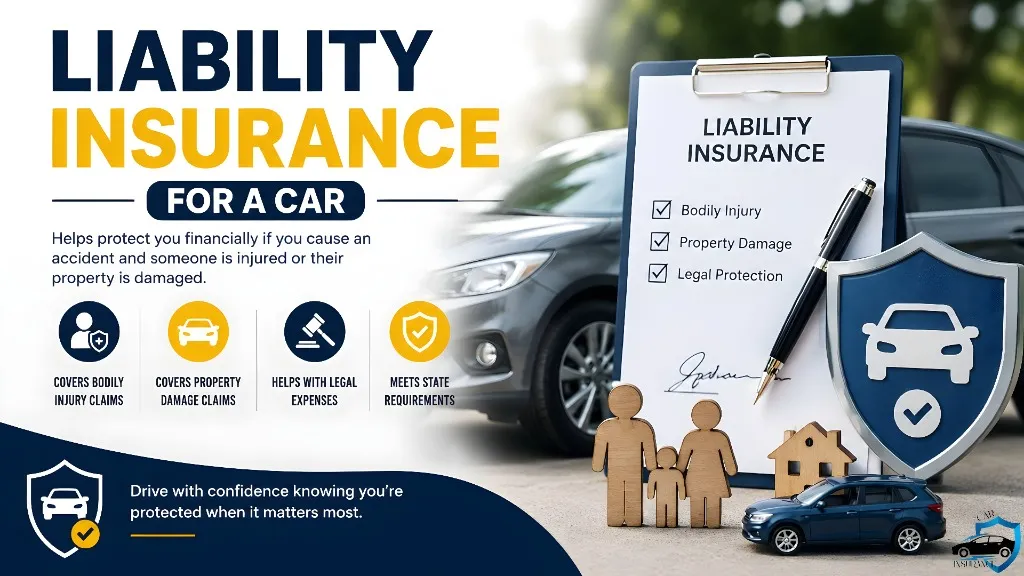
Discover how to find out what coverage, limits, cost, state requirements and money-saving tips are involved in a Liability Insurance for a Car policy. Learn how you can use a car’s liability insurance to save your money after an accident.
Introduction
As long as you can expect accidents to happen, you never know it will be a small collision that will result in expensive costs. When you’re at fault, medical and property damage costs, along with legal fees and forgone wages, can quickly accumulate. That’s why auto liability insurance is an important component of any auto insurance policy. It protects you from being hit with a financial burden from injuries or property damage to others, after an accident occurs.
Many drivers don’t fully understand the extent of protection they are entitled to by liability insurance for a car, or how the insurance works, in most states the driver operating the car is required to have liability insurance. The state minimum limits may be the statutory requirement, but they may not be adequate in the case of a serious accident. Knowing the information about your coverage options can prevent you from being surprised by out-of-pocket costs and can help you make sound decisions.
You’ll find all the information you need to understand about liability insurance for a car, including what it covers, how liability limits work, what factors affect the cost of liability insurance, and tips on selecting the appropriate coverage to avoid losing your money and assets.
Car Liability Insurance Explained

Car liability insurance is a type of auto insurance that provides coverage for the damages and injuries you cause to others and are liable for in an accident.
Liability coverage is not for your own car, unlike collision coverage, or comprehensive coverage. Rather, it is about settling the third party’s losses, if they occurred due to your accident.
Most insurance companies break down the liability coverage into two categories:
- Bodily Injury Liability Coverage
- Property Damage Liability Coverage
These coverages are vital for financial protection and will help drivers meet state insurance requirements.
The reason why liability insurance is so important.
To many drivers, auto insurance is nothing more than another monthly bill, but liability coverage is much more than that. It is designed to offer financial security when you are at fault for any injury or property damage to others. Even a small car accident can leave you with expensive medical bills, auto repairs and legal fees. The combined bill for a claim may be in the tens or hundreds of thousands of dollars in more severe instances.
But if a car doesn’t have the appropriate liability insurance, you could be on the hook for these costs. This may expose your savings, investments and other valuable assets to possible risk. Liability coverage can help mitigate these expenses by paying covered claims up to your policy limits, thus minimizing the financial strain that these costs may cause you if a claim is made.
Without enough liability coverage, you may experience the following financial consequences:
- Lawsuit claims by injured parties
- Wage garnishment
- Asset seizure
- Out-of-pocket medical expenses
- Costs of vehicle and property repair
- Long-term financial hardship
- Significant legal fees
Medical care and vehicle repairs continue to get more costly in today’s world, and having the appropriate level of liability insurance is more essential than ever. A strategy that is well set up is a monetary cushion that can help safeguard your future while supplying you with peace of mind with every drive.
Understanding Bodily Injury Liability Coverage
What Bodily Injury Liability Covers
Bodily injury liability coverage provides coverage for injuries suffered by others in a vehicle accident where you were at fault.
These may include costs associated with:
- Emergency room visits
- Hospital stays
- Surgeries
- Rehabilitation services
- Prescription medications
- Lost wages
- Pain and suffering
- Funeral expenses
- Legal defense costs
Bodily injury liability coverage, for instance, could help to cover the medical costs and damages to another driver, passenger or pedestrian who was injured in your accident.
Bodily Injury Liability is for injuries suffered by the policyholder or their passengers.
Most of the time, this coverage won’t cover these:
- Your injuries
- Your medical bills
- Damage to your car or truck.
Medical Payments Coverage (MedPay) or Personal Injury Protection (PIP) is required for personal injuries.
Understanding Property Damage Liability Coverage
Property damage liability pays for damages that you cause to someone else’s property.
The following is a list of Covered Property examples:
Property damage coverage can be used to help cover the costs of:
- Cars
- Trucks
- SUVs
- Motorcycles
- Buildings
- Mailboxes
- Fences
- Utility poles
- Road signs
- Storefronts
Property damage liability coverage might help cover the cost of repair or replacement if you accidentally hit a vehicle someone left parked in your driveway and damaged a nearby fence.
Property Damage liability is a car insurance coverage that doesn’t cover any damage to someone else’s vehicle.
Typically, the following is not covered by property damage liability:
- The cost of the damage to your vehicle.
- The cost of the damage to the vehicle.
- Items in your vehicle.
- Mechanical breakdowns
Most likely, collision coverage is mandatory to help protect your own vehicle.
How Liability Insurance Limits Work
One of the most important aspects of liability insurance for a car is understanding coverage limits.
Some insurance companies employ split-limit policies with three numbers.
For example:
100/300/100 Coverage
This means:
- $500,000/occurrence coverage limit
- $40,000 property damage coverage per occurrence.
- $300,000 coverage for bodily injury per accident.
- General Liability insurance of $100,000 per accident.
- General Liability insurance for $100,000 per accident.
Example
If you are involved in a multi-vehicle accident, for example.
The damages include:
- Driver A injuries: $90,000
- Driver B injuries: $70,000
- Property damage: $40,000
These types of costs would typically be covered under a 100/300/100 policy as they are all covered by the policy limits.
If damages are more than the policy limit, however, the policy may not cover the rest of the costs and you may be on the hook for the remainder.
The minimum liability requirements are outlined by the state.
Almost all states have minimum liability insurance requirements for drivers to legally operate their vehicles. The requirements are intended to provide drivers with an opportunity to compensate for at least part of the damages they may inflict on others in an accident. Infrequent coverage or failure to maintain coverage may result in fines, suspension of license, suspension of vehicle registration or other legal penalties.
The minimum liability limits are set by the State and typical examples of limits include:
- 25/50/25
- 25/50/15
- 50/100/25
- 50/100/50
These numbers are for three different coverage limits:
- The highest dollar limit for an individual’s personal injury damages in a crash.
- The highest sum awarded in a single accident for all the victims of the accident.
- The limits of liability as to property damage as a result of an accident.
Given an example of a 25/50/25 policy, you get up to $25,000 for bodily injury coverage per person, up to $50,000 for bodily injury coverage per accident, and up to $25,000 for property damage coverage. These minimum requirements are acceptable to the state insurance laws, but may not provide enough coverage in the event of a major accident with many injuries or costly vehicle repairs.
With medical bills and automotive repair costs on the rise, many insurance professionals advise policyholders to have coverage amounts greater than the minimum limit. This can mean better financial cover and stop you from having to pay out a lot of money if your damages are more than your policy will cover.
Does minimum coverage amounting to little more than a skin deep layer suffice?
A lot of drivers are only getting the required coverage that is required by law. This option can provide some immediate savings, but comes at a high risk to the individual.
Spending on health care continues to increase annually. Similarly, today’s cars that are fitted with sensors, cameras and sophisticated safety features can cost a lot to fix.
The state minimums aren’t necessarily realistic for a major accident.
That is why many insurance experts are suggesting the following higher liability limits:
- 100/300/100
- 250/500/100
The higher the limit, the better financially and more peace of mind.
How Much Liability Coverage Do You Need?
The level of coverage one should select will be dependent on a number of personal considerations.
Consider Your Assets
If you’re a driver with a lot of assets, it is highly advisable that you make sure you include higher limits.
Examples include:
- Homeowners
- Business owners
- Investors
- People with a substantial amount of savings
Take a look at how you drive.Look at your driving habits.
Drivers who:
- Commute daily
- Travel long distances
- Avoid driving in congested areas.
Have increased risk of an accident.
Consider Vehicle Values
Today’s vehicles are much more expensive to fix than older cars.
A minor car accident involving luxury vehicles can result in a very large amount of damages.
Liability Insurance vs Full Coverage
Insurance is known as liability insurance when some people mistake it for full coverage insurance.
Liability Insurance
When you cause a crash, you are covered by liability insurance.
Full Coverage Insurance
Typically covered by full coverage:
- Liability insurance
- Collision coverage
- Comprehensive coverage
Full coverage extends coverage, since it will cover damage to your own vehicle as well.
These are the things that liability insurance doesn’t provide coverage for.

Car Insurance policies can be extremely helpful financially, but they do not cover all types of loss. It’s mainly used to cover costs of injuries and property damage to others because you are at fault in an accident.
You should not expect liability insurance to include coverage for the following:
- Damage to your own car
- Theft
- Vandalism
- Water damage or storm damage
- Fire damage
- Your medical expenses
- Mechanical breakdowns
To keep these risks at bay, many drivers may use other forms of coverage like collision insurance, comprehensive insurance, medical payments coverage, or personal injury protection. These extra policies can provide a more comprehensive package of insurance and the financial burden following an accident or unexpected event can be minimised.
There’s a few more coverages to think about:
Collision Coverage
Collision insurance is a coverage that will help cover the cost of your vehicle’s damage in the event of a crash, no matter who is at fault.
Comprehensive Coverage
Under comprehensive coverage, claims relating to non-collision events are covered, such as:
- Theft
- Fire
- Vandalism
- Storm damage
- Falling objects
- Animal collisions
Medical Payments Coverage
Medical Payments Coverage will help you and your passengers with medical costs after a covered accident.
Personal Injury Protection (PIP)
PIP may cover:
- Medical expenses
- Lost wages
- Rehabilitation costs
Depending on the laws of your state.
Uninsured Motorist Coverage
If an at-fault driver has no insurance, Uninsured motorist coverage will cover you.
Underinsured Motorist Coverage
Underinsured motorist coverage is useful if the at-fault driver’s policy has insufficient coverage to pay for all the damages.
Rental Reimbursement Coverage
Rental reimbursement coverage is a bit of a miracle because it pays to get a different car while your own is being fixed.
The various factors influencing insurance premiums.
Risk assessment models are used by insurance companies to decide on pricing.
Driving Record
Insurers will usually offer a lower premium for a clean driving record.
Age
As a general rule, younger people will pay higher rates because they are inexperienced.
Vehicle Type
Rather, sports cars and luxury cars are more expensive to insure.
Location
You’ll likely pay more insurance if you drive in a bustling city.
Credit History
Credit-based insurance scores are calculated by many insurers for their rate-making process.
Annual Mileage
The more time on the road, the more you are exposed to accidents.
Saving Money on Liability Insurance.

Compare Multiple Quotes
One of the best ways to save on insurance is to shop around.
Keep your driving record clean!
Staying accident free and in good standing will help you avoid higher premiums.
Bundle Insurance Policies
Having home and auto insurance together can save you considerable money.
Ask About Discounts
Discounts can be as follows:
- Safe driver discounts
- Multi-vehicle discounts
- Military discounts
- Student discounts
- Defensive driving discounts
- Loyalty discounts
Improve Your Credit Profile
Many states offer the possibility of reducing insurance premiums by increasing credit scores.
If you are a new driver, you will need to get liability insurance.
Young drivers typically face the risk of higher insurance costs due to their inexperience behind the wheel and higher risk of accidents. Insurance companies evaluate risk when it comes to a rate, and inexperienced drivers are usually considered to be higher risk policyholders. This makes it difficult for teenagers, young adults and novice drivers to obtain cheap car insurance with liability coverage.
Fortunately, there are a number of ways that a new driver can cut insurance costs and still have enough coverage. Taking a defensive driving course offers a way to demonstrate safe driving behaviors and it could also earn a discount for the driver. Many insurance companies will also give good student rates, or reductions of rates, to students with good grades. Furthermore, ensuring no traffic violations, collisions or speeding tickets can help keep premiums manageable and create a favorable driving history over time.
New Drivers should:
- Complete defensive driving courses
- Keep up good grades (if eligible)
- Do not breach traffic laws and cause accidents
- Regularly shop for insurance quotes.
- Check for any discounts you can get
Typically, new drivers start with high auto insurance quotes and then begin to earn a lower rate as they accumulate driving experience and avoid any tickets for violations. Having a good driving history is one of the most useful steps that can be taken to get affordable liability car insurance and long-term savings as well.
Damage Liability Policy for high-risk car drivers.
High-risk drivers might be someone who:
- DUI convictions
- Multiple accidents
- Reckless driving violations
- Frequent traffic tickets
Premiums might go up, but having continuous insurance coverage can help increase your opportunities for insurance in the future.
Business Use / Commercial Coverage
Personal auto insurance might not give you the coverage you need if you use the car for business-related activities.
Examples include:
- Delivery services
- Commercial transportation
- Business travel
- Contractor work
In these cases, business vehicle insurance might be required.
Getting behind the wheel of a rental car.Operating a Rented Car
A large number of policies contain permissive use coverage.
This is because you can give someone the keys to your car and your insurance could still cover it.
But the policy is going to be different from policy to policy: so it is important to look into the details of your policy.
The rental car is a type of liability insurance.
You are at your own risk when renting a car if you do not have coverage under your policy.
Some personal auto policies cover liability for rental cars in the U.S. and Canada.
When considering renting a car:
- Review your policy
- Contact your insurer
- Check coverage information for rentals.
This is a basic measure that can prevent you from spending unforeseen money.
Common liability insurance mistakes

There are all sorts of things that many drivers do that they could avoid which places them in a financial position that they’re in danger of losing money.
Mistake 1: Purchasing only state minimum coverage.Mistake 1: Only buying state minimum coverage.
The coverage provided by minimum coverage may be inadequate.
Coverage Limits: You may think you’re covered, but you might not be.Mistake 2: Assuming coverage limits.
Usually higher limits offer much more protection.
Mistake 3: Not Compare Quotes
Different insurance companies charge different rates.
Mistake 4: Forgoing UM/UIM Coverage
Under- and uninsured motorists can cause significant costs.
Failure to review policies annually is error #5.Error #5 is that policies are not reviewed annually.
Life is ever changing, and so are insurance needs.
This is for additional coverage, called Umbrella Insurance.
A driver who has a lot of assets may opt for umbrella insurance.
The umbrella policy offers extra liability coverage over and above what your auto insurance policy covers.
Benefits include:
- Increased liability limits
- Greater asset protection
- Enhanced financial security
Umbrella insurance is particularly beneficial for high-net-worth individuals, professionals, and homeowners.
What happens after an accident?
Claim.
By understanding the claims process, stressful situations can be managed better.
Step 1: Ensure Safety
Look for injuries and call in the emergency services if necessary.
Step 2: Gather Information
Collect:
- Driver information
- Insurance details
- Vehicle information
- Witness contact information
Step 3: Inform Insurer
Report the accident as soon as possible.
Step 4: Work With Adjusters
Include proper documentation and information.
Step 5: Monitor Progress of Claims
Keep up to date during the settlement process.
Reasons why having enough coverage is helpful.
Increasing liability limits can offer a number of benefits:
- Better financial protection
- Asset protection
- Reduced out-of-pocket costs
- Increased peace of mind
- Stronger lawsuit protection
- Compliance with State laws
Many people who drive cars feel that the extra premium isn’t much and the protection is well worth it.
Conclusion
Having car insurance liability coverage is among the most critical types of vehicle coverage—when you are responsible for any injuries or property damage you cause during a mishap. Liability insurance protects against the financial anguish that can cause from the costs of medical bills, lost wages, vehicle repair and legal claims. If they aren’t protected, drivers could end up paying a lot of money out of their own pockets, which could affect savings, assets and financial health.
While most states mandate drivers have at least a minimum amount of liability coverage, some limits may still not be sufficient to cover the cost of a severe accident. If a medical claim or property damage exceeds minimum policies limits, you may be liable for the remaining amount. This is why many people opt to have higher liability limits to offer more security and peace of mind financially.
In choosing auto insurance liability coverage, a person should take into account his or her financial resources, driving history, and personal needs. Shopping around for insurance quotes, understanding limits and conditions and knowing what discounts are available can help you find a reliable insurance company that offers affordable coverage without compromising your protection. Also, comprehensive and collision insurance, uninsured motorist insurance and umbrella insurance may provide additional coverage when combined with liability insurance.
Finally, the best liability insurance policy is not just a legal obligation, it’s a safeguard for your wallet. With proper coverage, you can enjoy driving with peace of mind, confident that you are financially protected if an accident occurs.
FAQs Related to Liability Insurance for a Car
1 . What is liability insurance for a car?
Car liability insurance is a component of auto insurance that covers the costs of injury and property damage to others in a collision. Usually contains bodily injury liability and property damage liability coverage.
2 . Do you need car insurance?
Yes, all states mandate a minimum amount of liability coverage for drivers of a motor vehicle. The required coverage limits vary by state, so it’s important to check your local insurance regulations.
3 . How to cover damage to my own vehicle?
No. If your car causes damage or injury to someone else, your liability insurance will only cover the damage and injury that occurs to the other party. For protecting your own car, it may be necessary to have collision or comprehensive insurance.
4 . How much liability insurance coverage do I need?
Coverage amounts vary depending on the assets, finances and risk tolerance of the individual. There are also insurance professionals who say limits should be more than the state minimum to offer greater financial protection.
5 . How do I reduce the expenses of a liability car insurance policy?
The best ways to lower premiums include having a clean driving record, shopping around, bundling policies, defensive driving courses and asking about discounts.